

Stop! Here’s Why Burning Tree Stumps Is So Dangerous (And What To Do Instead)
Stop! Here’s Why Burning Tree Stumps Is So Dangerous (And What To Do Instead)
Burning tree stumps may seem easy, but it’s more risky than you might think. Learn about the dangers, legal issues, and better options for safe stump removal.
Depending on where you are in Michigan, burning tree stumps may or may not be allowed. However, regardless of whether you’re allowed to or not, burning a tree stump can have many unintended consequences.
Sure, at first, burning tree stumps might seem like a quick, cheap solution to get rid of an eyesore in your yard, but it’s one of the most dangerous choices you can make as a homeowner.
We’ve seen it firsthand. What starts as a “small backyard fire” can quickly turn into property damage, underground fires, or even legal trouble.
If you’re thinking about lighting that stump on fire, stop for a second. Here’s what you need to know, and what to do instead.
Key Takeaways: Burning Tree Stumps
Burning tree stumps can cause underground fires that last for days
It may be illegal in your area without permits
Fires can spread quickly to nearby structures or landscaping
Toxic fumes from burning wood can harm your health
Safer, faster options like stump grinding are available
Why Do People Burn Tree Stumps?
Let’s be honest, it sounds easy.
You’ve got a leftover stump, and burning it feels like a fast, low-cost fix. No equipment, no digging, no hauling anything away.
But what most homeowners don’t realize is that burning doesn’t just affect what you see above ground; it affects everything below it, too.
And that’s where things get dangerous.
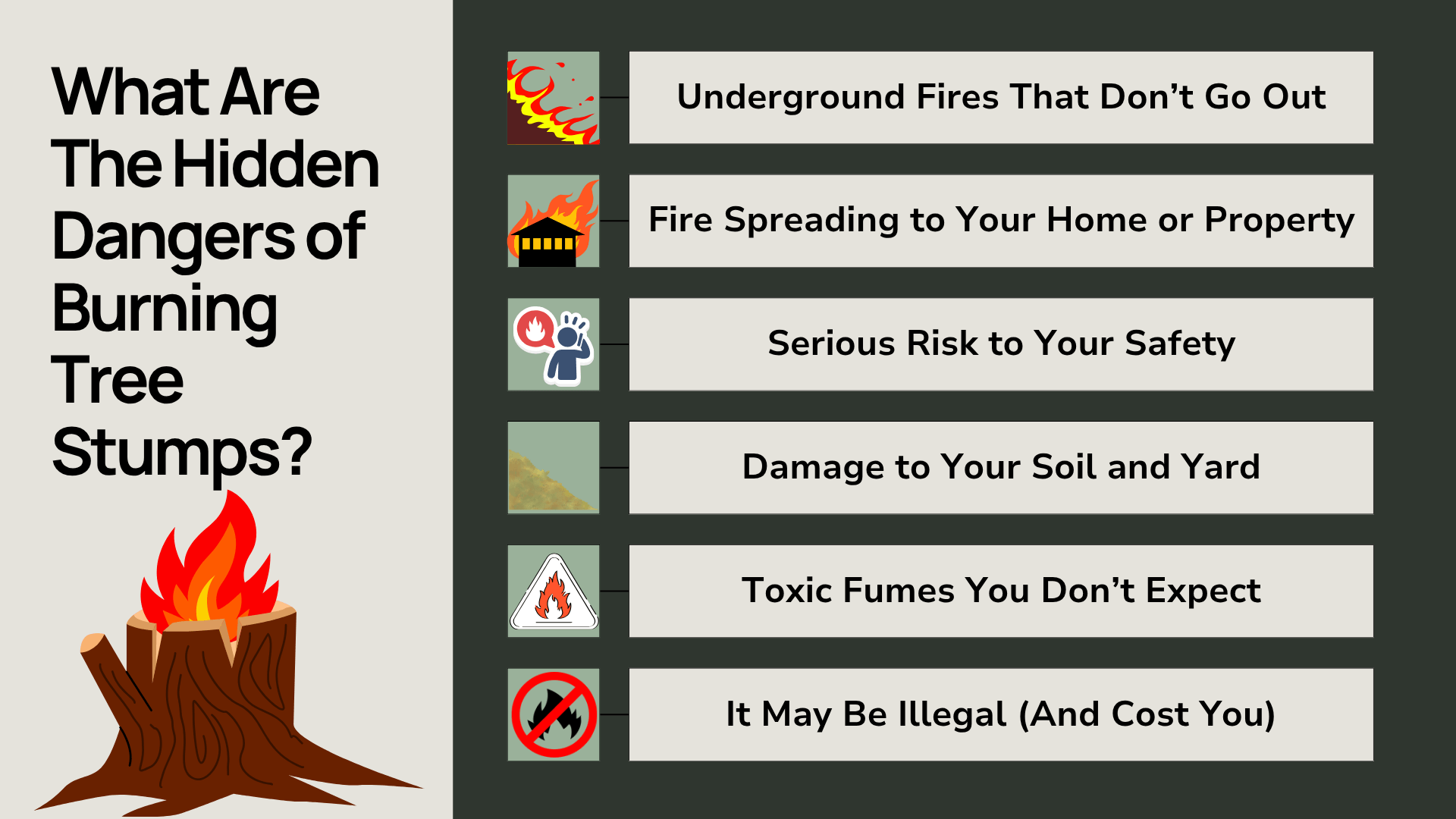
What Are The Hidden Dangers of Burning Tree Stumps?
Burning a tree stump is a pretty messy and risky way to remove trees. Here’s what can actually happen when you try burning tree stumps in your yard.
Underground Fires That Don’t Go Out
Tree roots extend far beyond the visible stump, often spreading several feet underground. When you burn a stump, those roots can catch fire and continue smoldering beneath the surface long after the flames are gone.
The danger? You can’t always see it happening.
You might think the fire is out. That is, until it shows back up somewhere else in your yard, near your home, or even under a structure. These hidden fires are extremely difficult to control without professional equipment, and your DIY project just became a lot more expensive than if you had hired a professional to remove the stump in the first place.
Fire Spreading to Your Home or Property
All it takes is one gust of wind.
Burning embers can travel farther than most homeowners expect, landing in places like:
Dry grass
Mulch beds
Fences
Decks
Nearby trees
Once that happens, the fire can spread quickly, especially during dry or windy conditions. What started as a “controlled” burn can turn into a fast-moving situation that puts your home and property at risk within minutes.
Serious Risk to Your Safety
Burning a stump isn’t as simple as lighting a fire pit.
You’re dealing with:
High, sustained heat
Smoke inhalation risks
Flying sparks and debris
Unpredictable flame patterns
Even standing nearby can be dangerous without proper protective gear. Add in the unpredictability of how wood burns, especially older or partially rotted stumps, and it becomes easy to lose control of the situation.
Damage to Your Soil and Yard
It’s almost impossible to completely control a fire. Burning doesn’t just remove the stump; it can damage everything around it.
High heat can:
Kill beneficial nutrients and microorganisms in the soil
Dry out and harden the ground, making regrowth difficult
Damage the roots of nearby healthy trees and plants
In many cases, homeowners are left with a scorched, uneven patch of land that requires additional work just to restore.
Toxic Fumes You Don’t Expect
Not all wood is safe to burn, especially in a residential setting.
If the stump has:
Been treated or exposed to chemicals
Absorbed pesticides or fertilizers
Grown with vines like poison ivy or poison oak
Burning it can release harmful toxins into the air. These fumes can irritate your lungs, affect your neighbors, and pose risks to pets and children nearby.
It May Be Illegal (And Cost You)
In some areas in southeastern Michigan, burning tree stumps requires permits or is restricted altogether due to fire risk. Plus, you often have to burn so many feet away from a building, which can become almost impossible in a residential neighborhood.
If something goes wrong, you could be held responsible for:
Property damage
Fire department response costs
Fines or legal penalties
Even if nothing spreads, violating local fire codes can still result in expensive consequences. What seems like a cheap, quick fix can turn into a costly mistake.
What To Do Instead of Burning Tree Stumps
The good news? You have safer, more effective options.
Here’s how to remove a tree stump that doesn’t involve fire.
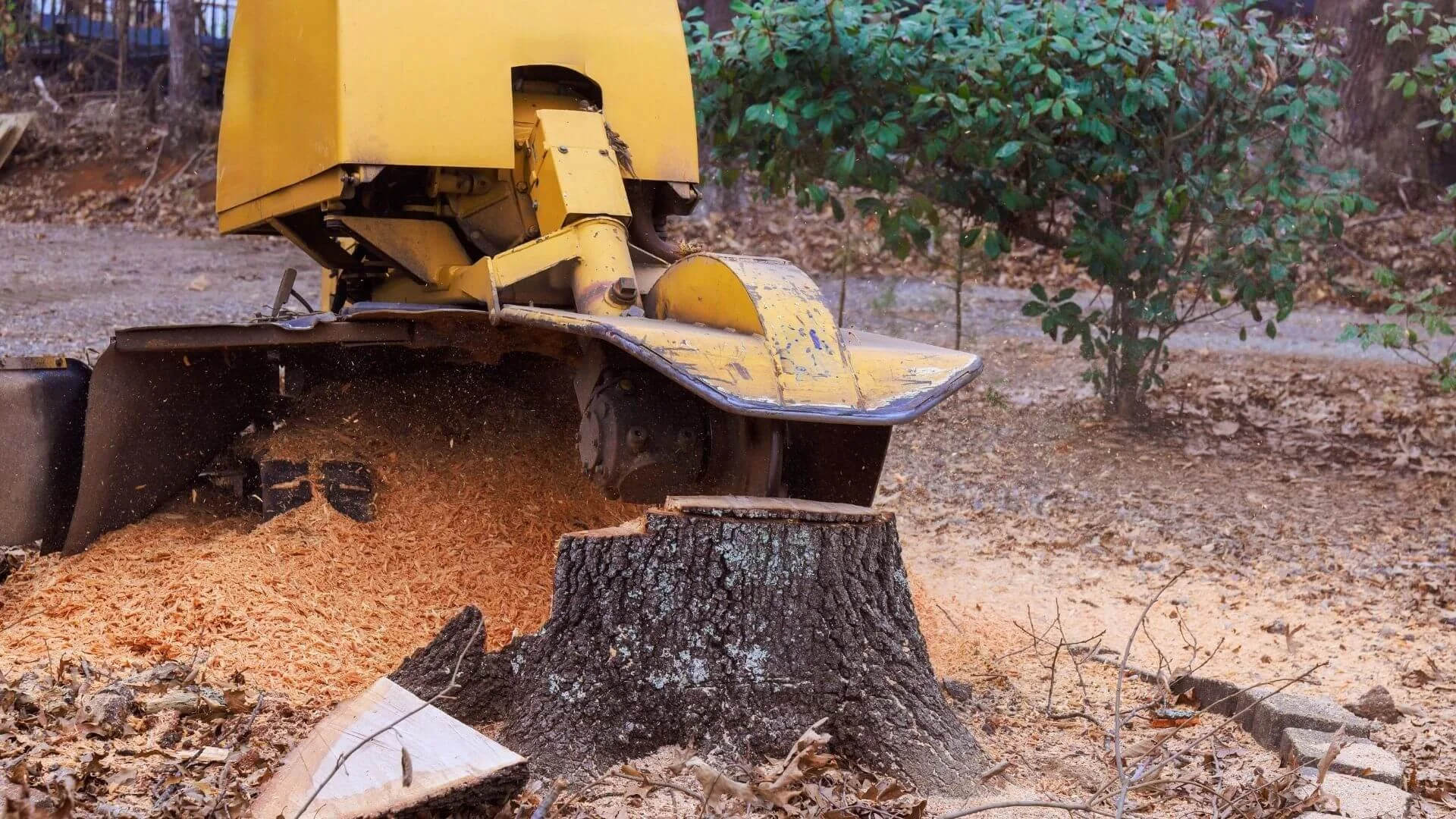
Stump Grinding (Fastest and Most Effective)
This is the most recommended option, and for good reason.
Stump grinding:
Removes the stump below ground level
Prevents regrowth
Leaves your yard ready for grass or landscaping
Gets the job done quickly and cleanly
At Trumpp Tree Service, this is our go-to solution for most properties.
Professional Stump Removal
For larger or more complex jobs, full removal may be the best option.
This involves removing:
The stump
The root system
Any debris left behind
It’s the safest way to completely eliminate the problem.
Chemical Decomposition (Slower Option)
If you’re not in a rush, chemical treatments can help break down the stump over time.
Just keep in mind:
It can take weeks or months
It still requires monitoring
It’s not ideal for large or deep-rooted stumps
Natural Decomposition
If you’re not in a rush, you don’t need to forcibly remove your tree stump. You can let the stump break down naturally, but this can take years.
For most homeowners, it’s not practical, but if you don’t mind the stump in your yard, this is a viable solution.
Why Hiring a Professional Is the Safer Choice
We understand the appeal of DIY. But when it comes to tree work, safety isn’t something you want to gamble with.
A professional tree service ensures:
Safe, controlled removal
No risk to your home or family
Proper equipment for the job
Complete cleanup afterward
At Trumpp Tree Service, we specialize in removing stumps safely, quickly, and without damage to your property.
We treat your yard like it’s our own, and when we’re done, the only thing left is a clean, usable space.
We’re Ready When You Are
If you’re dealing with a stump that’s in the way, don’t risk burning it.
Let us handle it the right way.
We offer:
Same-day quotes
Fast turnaround
Clean, professional results
Safe stump removal you can trust
Call Trumpp Tree Service today or request your free quote. We can often be there within hours.
Frequently Asked Questions About Burning Tree Stumps
Is burning tree stumps ever safe?
In most residential settings, no. The risks of fire spread, underground burning, and property damage are too high. Even when it seems controlled, fires can behave unpredictably, especially with roots burning below the surface.
Without professional equipment and supervision, it’s not a safe option for homeowners.
How long does a stump burn for?
It depends on the size and condition of the stump, but the visible fire is only part of the problem. Even after flames die down, roots can continue to smolder underground for hours or even days.
This hidden burning is what makes it so dangerous and difficult to fully extinguish.
Is it illegal to burn a tree stump?
In many areas, yes, or it requires permits and strict guidelines. Local fire codes often restrict open burning due to safety and environmental concerns. If you burn without approval or the fire spreads, you could face fines, liability for damages, or even legal action.
What’s the safest way to remove a tree stump?
Stump grinding is typically the safest, fastest, and most effective option. It removes the stump below ground level without the risks of fire, leaving your yard clean and ready for use. For larger or more complex situations, professional stump removal may be recommended.
Can a stump grow back if I don’t remove it?
Yes. Some tree species will continue to sprout new growth from the stump or roots. This can lead to multiple small trees growing in place of the original, making the problem harder to manage over time.
Why is burning a stump worse than it looks?
Because most of the danger is hidden, what you see above ground is only part of the fire. Roots can spread heat underground, embers can travel, and the fire can reignite unexpectedly. It’s not just about removing wood; it’s about controlling something that’s hard to see and even harder to stop.
Can burning a stump damage my yard long-term?
Yes. High heat can destroy soil nutrients, kill beneficial organisms, and make it harder for grass or plants to grow back. In some cases, homeowners are left with a scorched area that requires additional work to restore.
What should I do if I have already tried to burn a stump?
If the fire is still active or you suspect underground burning, stay clear and contact professionals immediately. Even if it looks like it’s out, monitor the area closely. It’s often best to have a tree service inspect the site to make sure there’s no lingering risk.
When in doubt, call your local fire department; it’s always better to be safe than sorry.
Is DIY stump removal ever a good idea?
For very small stumps, it can be manageable with the right tools. But for larger stumps, deep roots, or anything near structures, DIY methods can quickly become dangerous. Most homeowners find it safer, faster, and less stressful to call a professional.
How quickly can a professional remove a stump?
In many cases, stump grinding can be completed in just a few hours, depending on the size and location. At Trumpp Tree Service, we often provide same-day quotes and fast turnaround so you can get your yard back to normal quickly.
