

How To Remove a Tree Stump (And When to Call the Pros)
When a tree is removed from your property, the job often isn’t completely finished. What’s left behind is the stump, a stubborn reminder of the tree that once stood there.
For many homeowners, a tree stump quickly becomes a problem. It can be an eyesore, a tripping hazard, and an obstacle for landscaping or lawn maintenance. Some stumps may even begin sprouting new growth or attract insects and pests.
That’s why many homeowners start asking the same question: how to remove a tree stump safely and effectively.
The answer depends on several varying factors. How big is the stump? What kind of tree is it? Where in your yard is it located? All of these are going to impact how to handle your tree stump removal.
Let’s walk through the most common stump removal methods and what you should know before tackling the job.
Key Takeaways: How To Remove a Tree Stump
Tree stumps can become tripping hazards, attract pests, and interfere with landscaping.
Small stumps may be removed by digging, but larger stumps require specialized equipment.
Stump grinding is often the fastest and most efficient removal method.
Chemical treatments and natural decay take months or even years.
DIY stump removal can be dangerous without the proper tools and experience.
Hiring a professional stump removal company is often the safest and most efficient solution.
Why Removing a Tree Stump Matters
Some homeowners choose to leave stumps in place, but this often creates long-term issues.
Tree stumps can:
Attract termites, ants, and beetles
Create mowing obstacles
Cause tripping hazards
Produce unwanted tree sprouts
Take up valuable yard space
Depending on the species of tree, a stump can take 7–20 years to fully decay naturally.
If you’re planning landscaping improvements, installing a patio, or planting new trees, removing the stump sooner is usually the better option.
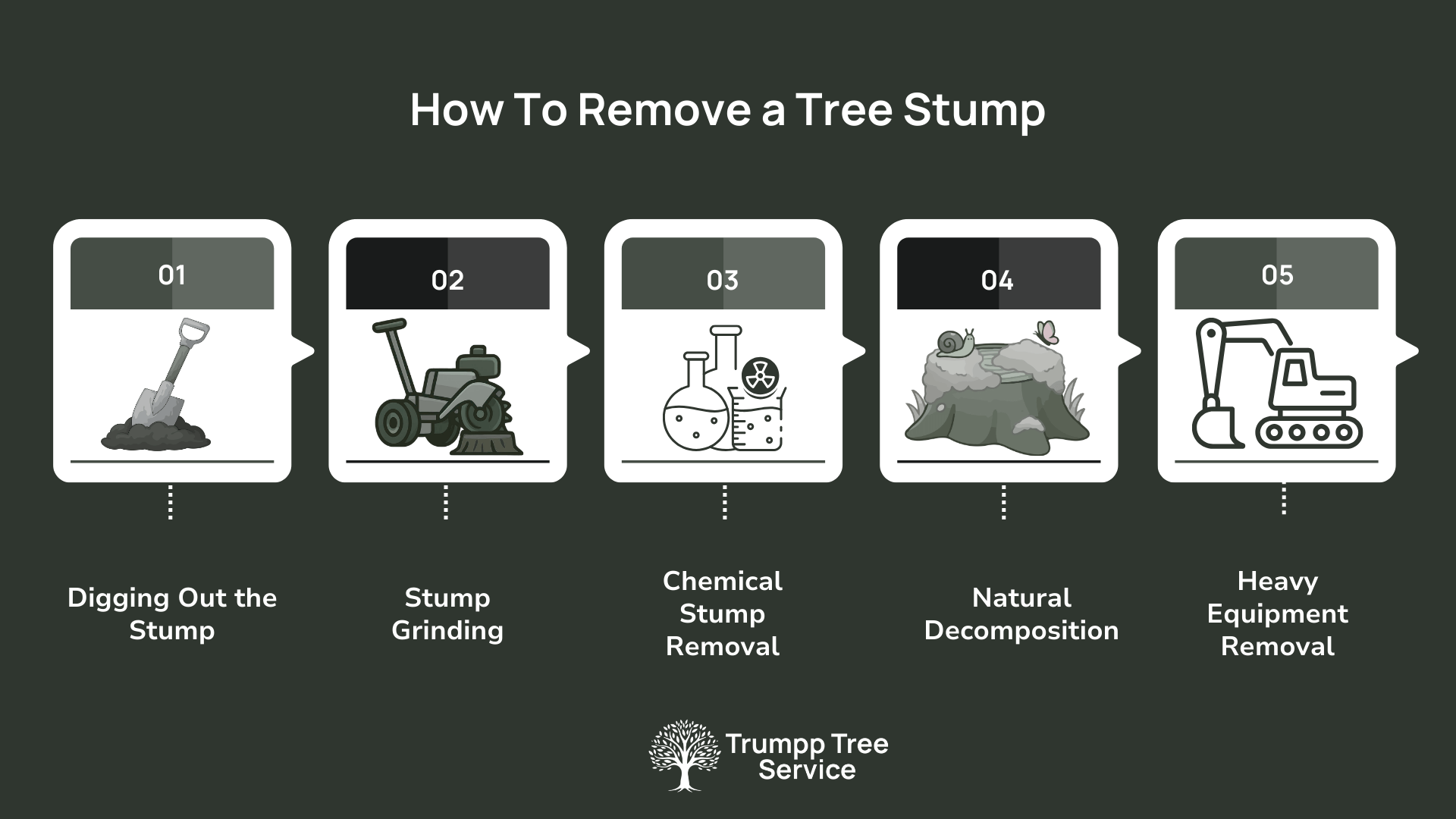
Methods: How To Remove a Tree Stump
There are several ways to remove a stump. Each method varies in difficulty, cost, and time required.
Digging Out the Stump
Digging is one of the most traditional stump removal methods, but it’s also one of the most labor-intensive.
This method typically involves:
Digging around the stump to expose roots
Cutting large roots with an axe or chainsaw
Using a pry bar or winch to lift the stump out of the ground
This approach works best for small trees with shallow root systems.
Larger trees can have roots extending several feet underground, making manual removal extremely difficult and time-consuming.
For large stumps, digging can take hours or even an entire day of hard labor.
Stump Grinding
Stump grinding is the fastest and most common professional stump removal method.
A specialized machine called a stump grinder uses a rotating cutting wheel to grind the stump into small wood chips.
The grinder typically removes the stump 8–12 inches below ground level, allowing the area to be filled with soil and replanted.
Benefits of stump grinding include:
Fast removal (often within hours)
Minimal disturbance to the surrounding yard
Safe removal of large hardwood stumps
Immediate landscaping opportunities
Because stump grinders are heavy and powerful machines, they’re typically operated by professional tree service companies.
Chemical Stump Removal
Another method involves using chemical stump removers to speed up natural decomposition.
This process usually includes:
Drilling holes into the stump
Filling the holes with a chemical solution or salts
Covering the stump to protect pets and children
The chemicals break down the wood fibers, allowing the stump to soften and decay.
However, chemical methods can take several months to a year before the stump fully decomposes.
In addition, chemical treatments may alter soil conditions, which can make replanting difficult until the soil recovers.
Natural Decomposition
The easiest method is simply allowing the stump to decay naturally.
However, this requires patience.
Depending on the species of tree and soil conditions, natural decay can take 10 to 20 years.
Some homeowners speed up the process by:
Drilling holes in the stump
Adding nitrogen-rich fertilizer
Keeping the stump moist
Even with these efforts, natural decomposition remains a long-term process.
Heavy Equipment Removal
Large stumps with deep root systems sometimes require heavy machinery such as:
Backhoes
Compact tractors
Excavators
This approach involves digging out the stump and root system entirely.
While effective, it can significantly disturb the surrounding soil and landscaping.
For residential properties, stump grinding is usually the preferred solution because it minimizes damage to the yard.
Tree Stump Removal Methods to Avoid
Some stump removal methods are not recommended.
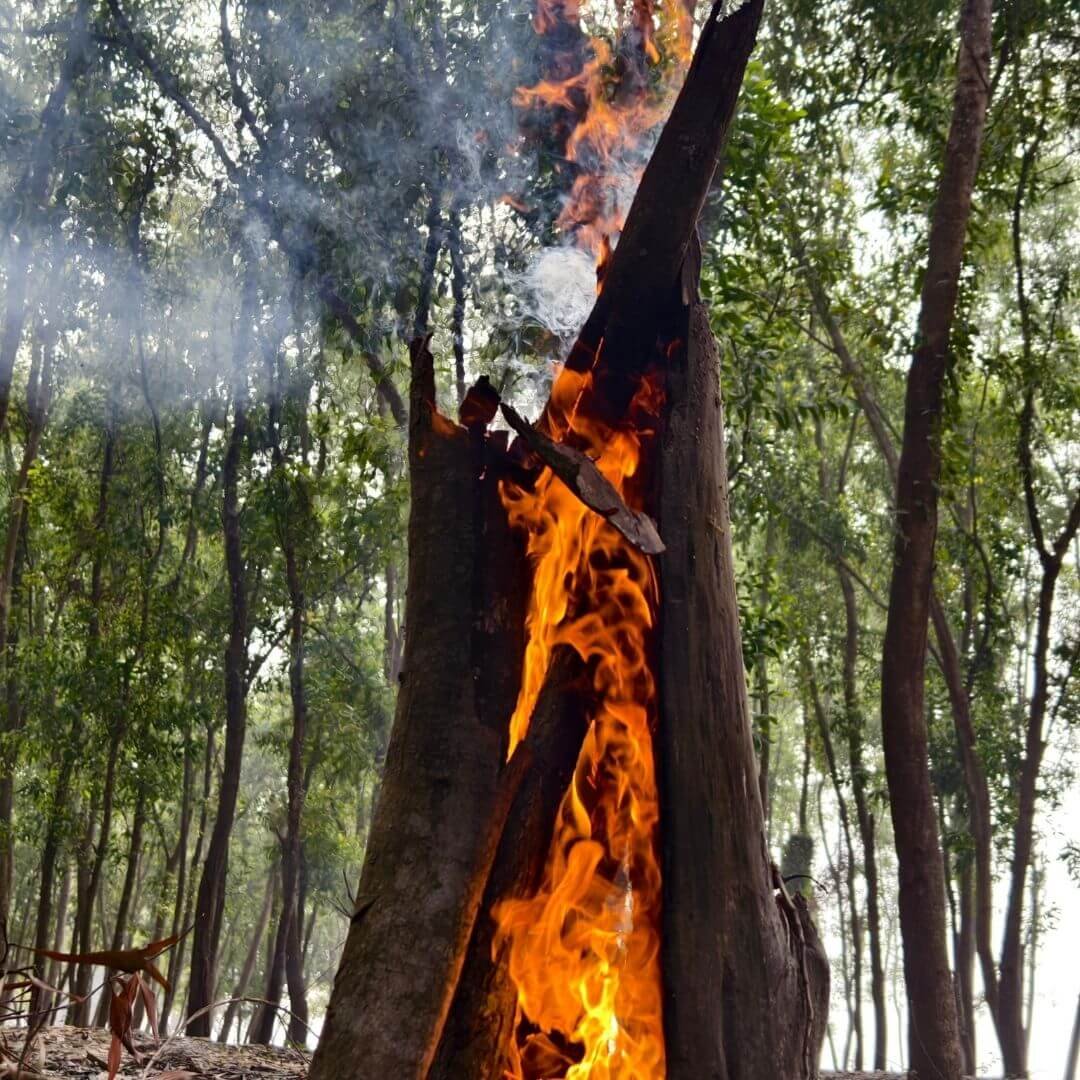
Burning a Tree Stump
Burning was once a common method for stump removal, but today it’s often restricted or illegal in many municipalities.
Burning a stump can:
Create fire hazards
Produce heavy smoke
Contaminate soil with chemicals
Spread fire underground through root systems
For safety reasons, this method is rarely recommended in residential areas.
The Dangers of Removing a Tree Stump Yourself
Many homeowners underestimate how difficult stump removal can be.
Large tree stumps are extremely heavy and connected to extensive underground root systems. Attempting to remove them without the right tools can lead to serious injuries.
Common risks include:
Chainsaw injuries
Flying debris from grinders
Muscle strains from heavy lifting
Equipment accidents
Damage to underground utility lines
It’s also easy to overlook buried cables, irrigation lines, or gas lines while digging.
Professional tree services follow strict safety procedures and know how to locate underground utilities before work begins.
What looks like a simple job can quickly become dangerous without proper training and equipment.
What Happens After a Stump Is Removed?
Once the stump is gone, the area typically needs to be restored.
This may include:
Removing wood chips or debris
Filling the hole with nutrient-rich soil
Regrading the area
Planting grass or landscaping
Stump grinding leaves behind wood chips that are perfect for mulch or can be removed depending on your landscaping plans.
After the soil settles, the area can even be replanted with grass, flowers, or a new tree.

Why Professional Stump Removal Is Often the Best Choice
Removing a stump yourself may seem like a way to save money, but it often ends up costing more time, effort, and risk than expected.
Professional stump removal offers several advantages:
Specialized equipment for fast removal
Safe handling of large root systems
Protection for the surrounding landscaping
Complete cleanup after the job
Proper soil restoration
At Trumpp Tree Service, we have the right team to help remove tree stumps safely and efficiently while leaving your property clean and ready for its next use.
Local Stump Removal You Can Trust
At Trumpp Tree Service, we help homeowners across Southeastern Michigan safely handle tree removal and stump grinding.
Our team serves:
Clarkston
Rochester
Waterford
Brighton
Bloomfield
Milford
Auburn Hills
and surrounding communities.
We’re fully licensed, insured, and covered by workers’ compensation, so you can have complete peace of mind.
Whether you need tree removal, tree trimming, or stump grinding, our experienced crews are ready to help.
Don’t Let a Tree Stump Take Over Your Yard
Tree stumps can become a bigger problem than many homeowners expect.
If you’re tired of mowing around a stump or planning improvements to your yard, professional removal can restore the space quickly and safely.
Call Trumpp Tree Service today for a free quote.
We’ll assess the stump, explain your options clearly, and handle the job safely from start to finish.
Fast. Local. Done right the first time.
Frequently Asked Questions About Tree Stump Removal
How long does it take for a tree stump to rot naturally?
Natural stump decay can take anywhere from 7 to 20 years, depending on the species of tree and environmental conditions.
What is the fastest way to remove a tree stump?
Stump grinding is typically the fastest and most efficient method. A professional crew can often grind a stump down in under an hour.
Can a tree grow back from a stump?
Yes. Some tree species can sprout new growth from a stump if the roots remain alive.
Is stump grinding bad for the soil?
No. Stump grinding is generally safe for soil, although leftover wood chips may temporarily affect nutrient balance until they decompose.
Can I plant a new tree where a stump I had the tree stump removed?
Yes, but the soil may need to be amended after removal. Adding fresh soil and compost helps create healthy conditions for new planting.
How much does stump removal typically cost?
The cost of removing a tree stump is going to depend on several factors, including the size of the stump, the tree species, root depth, and accessibility. Most professional stump grinding services price jobs based on the stump’s diameter. Larger hardwood stumps or stumps located near structures may cost more to remove.
What is the difference between stump grinding and a stump removal?
Stump grinding removes the visible portion of the stump by grinding it down below ground level, usually 8–12 inches deep. Full stump removal involves excavating the entire root system, which requires heavy equipment and significantly disrupts the surrounding soil.
In most residential situations, stump grinding is the preferred method.
