

What Is Deep Root Fertilization, and Do I Really Need It?
If your trees don’t look as healthy as they should, maybe the leaves are dull, growth seems slow, or branches are thinning, you’ve probably started looking for solutions.
That’s where deep root fertilization comes in.
It’s often recommended as a way to restore struggling trees, improve soil health, and promote stronger growth. But like many tree care services, there’s also confusion around whether it’s truly necessary.
So let’s break it down clearly.
We’ll walk through what deep root fertilization is, how it works, when it actually helps, and when it might not be needed.
Key Takeaways: Deep Root Fertilization
Deep root fertilization delivers nutrients directly into the soil around tree roots
It can improve tree health, growth, and soil conditions in some situations
Not all trees need fertilization, especially if the soil is already healthy
Surface fertilization can sometimes be just as effective, depending on conditions
A professional application guarantees proper coverage and avoids waste
A tree inspection is the best way to determine if fertilization is needed
What Is Deep Root Fertilization?
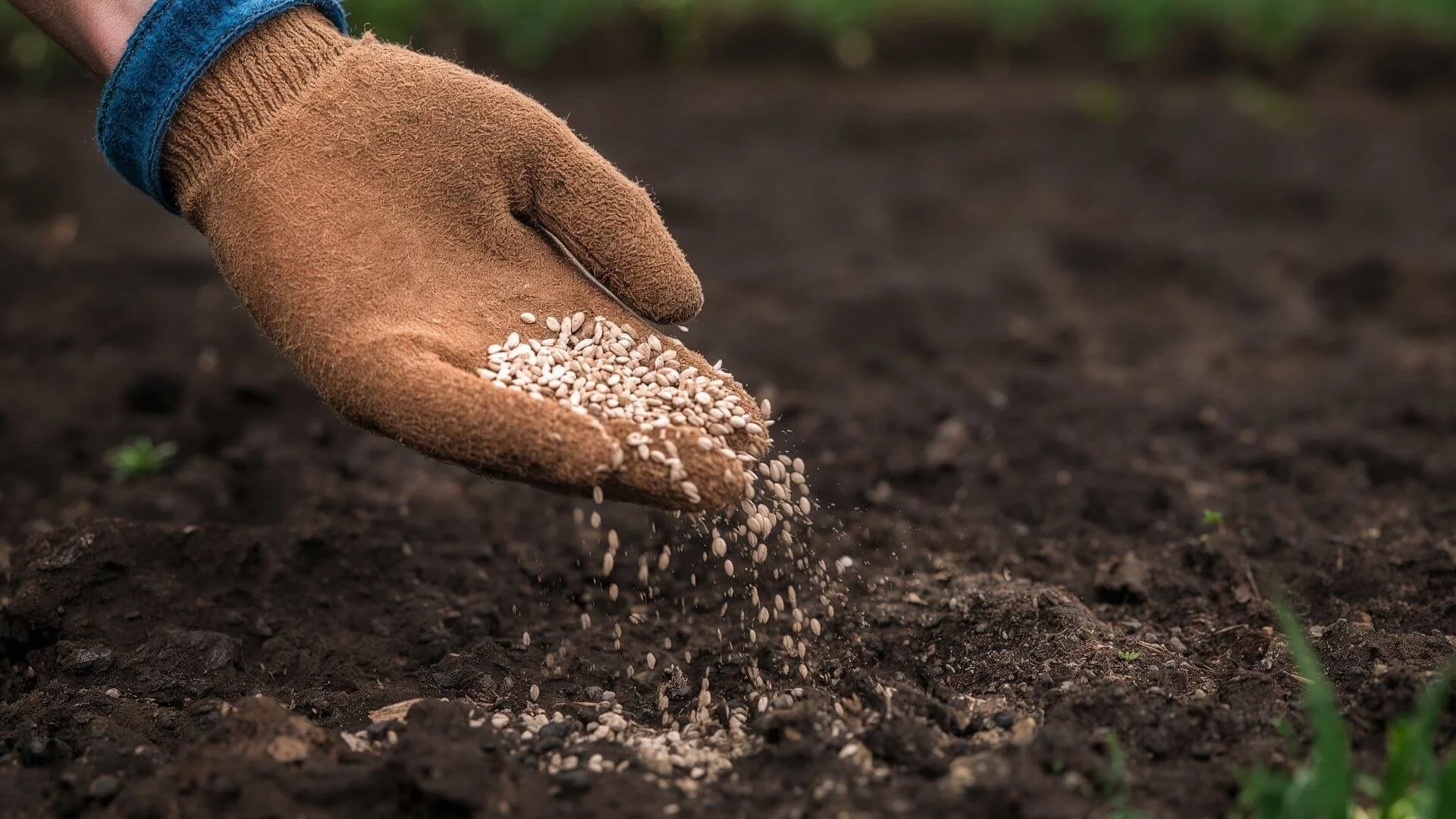
Deep root fertilization is a fertilization process where a liquid nutrient solution is injected into the soil around a tree’s root system.
Instead of spreading fertilizer on the surface as you would for a lawn, this method uses specialized equipment to place nutrients several inches below ground, right where roots can absorb them.
The process typically involves:
Injecting nutrients about 4–8 inches deep
Treating the entire root zone in a grid pattern
Targeting the area under the tree canopy (and sometimes beyond)
The goal is simple: deliver nutrients directly to the roots where they’re needed most.
This is especially helpful in environments where soil is compacted or lacking nutrients.
Why Trees Sometimes Need Fertilization
In natural environments, trees get nutrients from decomposing leaves and organic matter.
But in residential areas, that natural cycle is often disrupted.
Leaves are removed, soil is compacted, and grass competes for nutrients. Over time, this can lead to deficiencies that affect tree health.
Common signs your tree may need fertilization include:
Sparse or thinning canopy
Small or discolored leaves
Slow growth
Early leaf drop
Branch dieback
When these issues show up, fertilization may help restore balance and support healthier growth.
How Deep Root Fertilization Works
The process isn’t just about adding nutrients. It’s about improving the entire environment where your tree’s roots grow, so they can function the way they’re supposed to.
During treatment, a specialized tool injects a liquid blend of specific nutrients directly into the soil around the tree’s root zone. This typically happens several inches below the surface, right where most feeder roots are actively absorbing water and nutrients.
At the same time, the injection process gently breaks up compacted soil. That matters more than most homeowners realize. When soil is too dense, roots struggle to spread, absorb nutrients, and get the oxygen they need to stay healthy.
Here’s what’s happening during the process:
Nutrients are delivered directly to the root zone, instead of sitting on the surface
Soil is slightly loosened, helping reduce compaction
Water, oxygen, and nutrients can move more freely through the soil
When those conditions improve, your tree has a much better chance to recover and grow stronger.
Over time, this can help trees:
Develop deeper, more stable root systems
Absorb nutrients more efficiently instead of competing with grass
Recover from stress caused by drought, disease, construction, or poor soil conditions
In some cases, deep root fertilization also improves overall soil structure and aeration. That creates a healthier foundation for long-term growth, not just a quick fix.
That’s the key: to give your tree a better environment to thrive in.
What Are The Benefits of Deep Root Fertilization?
When used in the right situation, deep root fertilization can make a noticeable difference in both the health and appearance of your trees.
Homeowners often start to see improvements over time, especially when trees have been struggling due to poor soil, stress, or nutrient deficiencies.
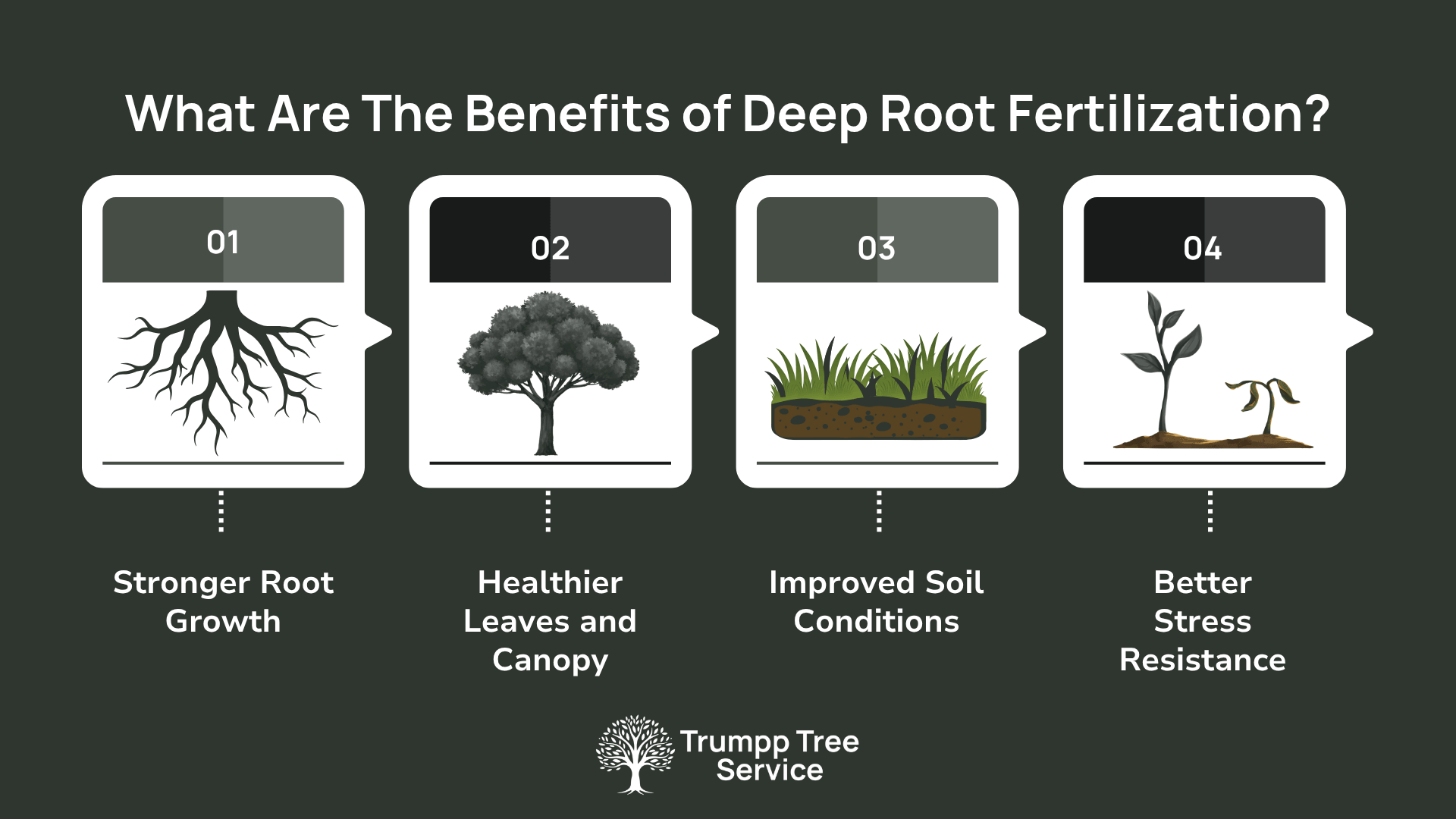
Stronger Root Growth
Nutrients delivered directly to the root zone encourage deeper, more stable root systems. Instead of shallow, weak roots, trees develop a stronger foundation that helps them stay anchored and absorb what they need more efficiently.
Healthier Leaves and Canopy
With better access to nutrients, trees often produce fuller foliage with richer color and improved density. Leaves may look greener, healthier, and more consistent across the canopy, which is a strong sign the tree is thriving.
Improved Soil Conditions
Deep root fertilization goes beyond feeding your tree directly by helping to improve the soil around it as well.
By loosening compacted soil and distributing nutrients evenly, it creates a healthier environment where roots can grow, expand, and function properly.
Better Stress Resistance
Healthier trees are naturally more resilient. With stronger roots and better nutrient absorption, they’re better equipped to handle Michigan weather, including heavy storms, dry spells, and seasonal stress. They’re also less vulnerable to disease and pest issues.
Over time, these benefits work together to support long-term tree health, not just short-term improvement.
Does Deep Root Fertilization Always Work?
Here’s where things get important.
Deep root fertilization is helpful in many cases, but it’s not always necessary.
Research shows that many tree roots are actually located in the top few inches of soil, where nutrients are naturally absorbed.
That means:
Surface fertilization can sometimes be just as effective
Healthy soil may already provide enough nutrients
Over-fertilizing can actually harm trees
In other words, fertilization isn’t a one-size-fits-all solution.
The right approach depends on your soil, your trees, and your property conditions.
When Deep Root Fertilization Makes Sense
There are specific situations where deep root fertilization is especially beneficial.
It’s often recommended when:
Soil is compacted from foot traffic or construction
Trees show clear signs of nutrient deficiency
Trees are stressed from drought or environmental conditions
Lawn competition prevents nutrients from reaching roots
Urban soil lacks organic matter
In these cases, delivering nutrients directly to the root zone can help trees recover faster and grow stronger.
When Deep Root Fertilization Might Not Be Necessary
Deep root fertilization isn’t the right solution for every tree.
It may not be needed if:
Your trees are already healthy and thriving
Soil conditions are balanced and nutrient-rich
You regularly mulch and maintain natural soil health
Fertilization is already being applied through lawn care
In fact, unnecessary fertilization can lead to runoff, wasted nutrients, and even environmental concerns. If you’re unsure whether it's right for your trees or not, reach out to us, and we can come take a look and give you our professional opinion.
DIY vs Professional Fertilization
Some homeowners choose to fertilize their trees themselves using granular or liquid products.
While this can help in certain cases, it doesn’t always deliver consistent results.
DIY fertilization often:
Stays near the surface
Gets absorbed by grass instead of trees
Washes away with rain
Professional deep root fertilization uses specialized equipment to ensure nutrients reach the correct depth and are evenly distributed.
It’s more precise, more efficient, and often more effective when trees are struggling.
Why a Professional Evaluation Matters
Before deciding on deep root fertilization, the most important step is understanding what your trees actually need.
That starts with a proper inspection.
At Trumpp Tree Service, we look at:
Soil conditions
Tree health and growth patterns
Signs of disease or stress
Root zone environment
From there, we recommend the right solution, whether that’s fertilization, tree trimming, or another service.
Local Tree Care You Can Trust
We’ve helped homeowners and HOAs across Southeastern Michigan keep their trees healthy, safe, and strong.
Our team serves:
Clarkston
Rochester
Waterford
Brighton
Bloomfield
Milford
Auburn Hills
and surrounding communities
We’re licensed, insured, and experienced in handling everything from routine tree care to complex, high-risk jobs.
Not Sure If Your Trees Need Fertilization?
If your trees don’t look right, it’s worth taking a closer look.
Deep root fertilization can be a powerful tool, but only when it’s used in the right situation. We’ll give you honest answers, clear recommendations, and no pressure.
Call Trumpp Tree Service today for a free quote.
We’ll help you understand what your trees need and take care of the rest.
Fast. Local. Done right the first time.
Frequently Asked Questions About Deep Root Fertilization
How often should deep root fertilization be done?
Most trees benefit from fertilization once a year, typically in the fall or early spring, depending on their condition and environment.
How long does it take to see results?
Some improvements, like leaf color and growth, may be noticeable within a few weeks, while full benefits develop over the growing season.
Is deep root fertilization safe for my lawn?
Yes. When done professionally, the process targets tree roots and minimizes impact on surrounding grass and landscaping.
Can deep root fertilization help a dying tree?
It can help stressed or nutrient-deficient trees, but it won’t fix severe disease or structural damage. A professional evaluation is important.
Is deep root fertilization better than regular fertilizer?
It depends. In some cases, deep root fertilization is more effective. In others, surface fertilization works just as well.
