

Preventative Tree Care: How To Prevent Damage Caused By Trees
Most tree emergencies don’t happen out of nowhere.
Usually, there were warning signs long before the branch fell on the driveway or the tree started leaning toward the house. The problem is that many homeowners don’t notice those signs until it’s already become dangerous.
That’s where preventative tree care comes in.
At Trumpp Tree Service, we help homeowners across Eastern Michigan identify small problems before they turn into expensive or dangerous ones. Proper tree maintenance can help prevent storm damage, improve tree health, and protect your home and family year-round.
Let’s walk through what preventative tree care actually means and why it matters more than most people realize.
Key Takeaways
Preventative tree care helps reduce the risk of property damage and tree failure
Regular inspections can catch dangerous issues early
Tree trimming improves safety, structure, and long-term tree health
Storm preparation is one of the most important parts of tree maintenance
Healthy trees are stronger, safer, and more resistant to disease and weather damage
What Is Preventative Tree Care?
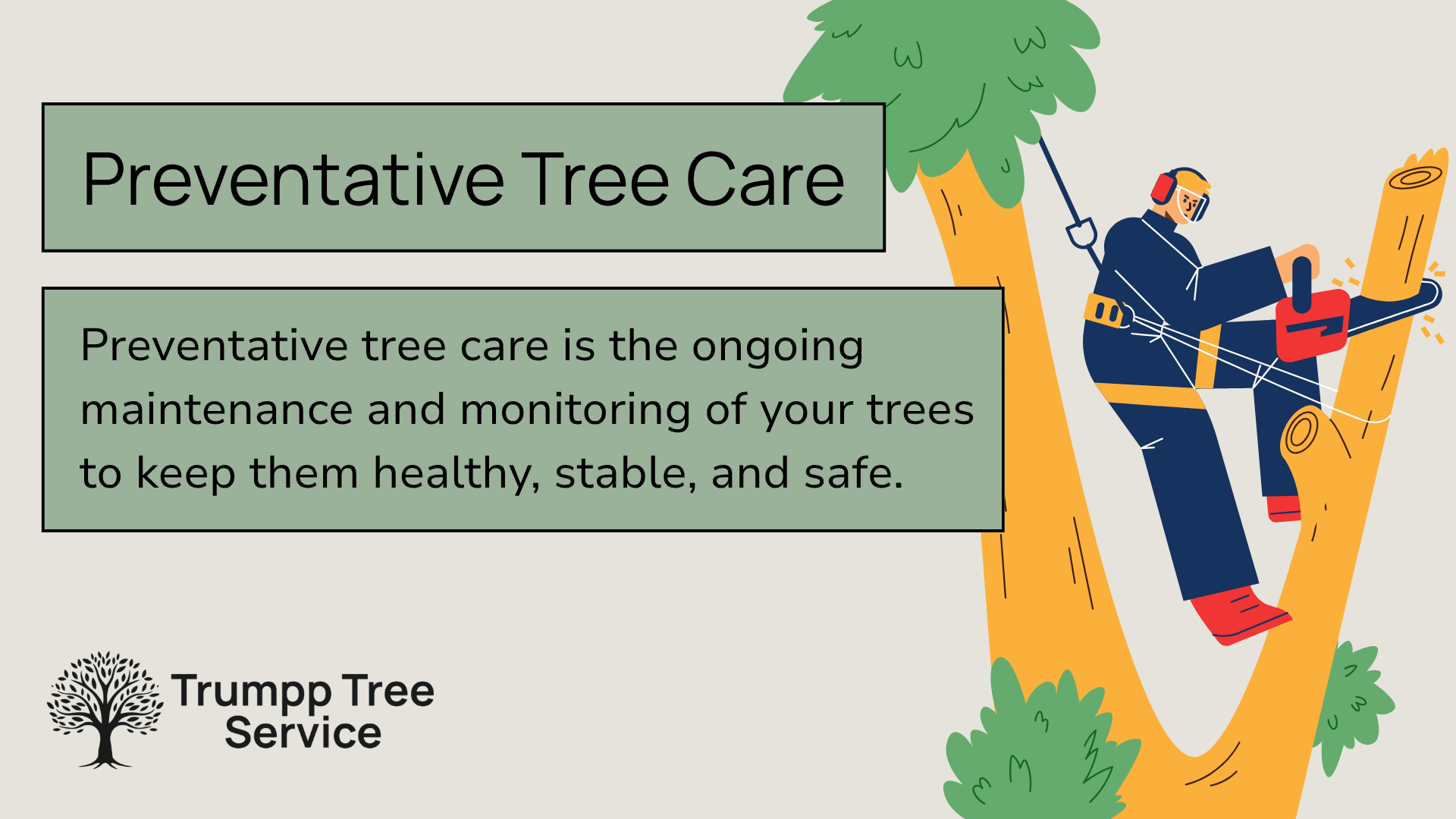
Preventative tree care is the ongoing maintenance and monitoring of your trees to keep them healthy, stable, and safe.
Instead of waiting until a branch falls or a tree becomes hazardous, preventative care focuses on catching issues early before they become emergencies.
This often includes:
Tree trimming
Health inspections
Dead branch removal
Storm preparation
Deep root fertilization
Monitoring for disease or decay
Removing dangerous limbs
Think of it the same way you think about maintaining your roof or HVAC system. Taking care of small issues early helps avoid much bigger problems later.
Why Does Preventative Tree Care Matter?
Trees are a huge part of your property, but they can also become one of the biggest risks if they’re neglected.
A poorly maintained tree can:
Drop large branches unexpectedly
Damage roofs, vehicles, and driveways
Fall during storms
Spread disease to nearby trees
Become unstable over time
Preventative tree care helps reduce those risks while also improving the appearance and lifespan of your trees.
How Does Preventative Tree Care Help Prevent Damage?
The goal of preventative tree care is to keep your trees structurally strong and healthy enough to handle Michigan’s unpredictable weather.
Reduces Storm Damage Risk
Strong winds, heavy snow, and ice put enormous stress on trees.
Regular trimming helps:
Remove weak or dead branches
Reduce excess canopy weight
Improve airflow through the tree
Reduce the chance of limbs snapping during storms
Healthy, balanced trees are far more likely to survive severe weather without causing damage.
Helps Identify Dangerous Trees Early
Some trees show warning signs long before they fail.
Regular inspections help spot:
Cracks in the trunk
Decay or fungus growth
Leaning trees
Root problems
Dead or hanging limbs
Structural weaknesses
Catching these issues early gives you more options before the tree becomes an emergency.
Improves Tree Health
Preventative care isn’t just about safety, either. Healthy trees grow stronger, recover better from stress, and live longer.
Services like pruning and deep root fertilization help trees:
Absorb nutrients more efficiently
Develop stronger root systems
Resist disease and pests
Handle drought and environmental stress better
Protects Your Property Value
Well-maintained trees improve curb appeal and help your property look cared for. On the other hand, overgrown or unhealthy trees can quickly make a property feel neglected or unsafe.
What Causes Trees To Become Dangerous?
Most dangerous trees don’t become hazardous overnight. In many cases, the problem develops slowly over several years before homeowners notice anything is wrong.
Storm Damage and Heavy Weather
Michigan storms put enormous stress on trees.
Strong winds, ice accumulation, and heavy snow can weaken branches, split trunks, or loosen root systems over time. Even healthy-looking trees can develop hidden structural damage after severe weather.
That’s why it’s important to inspect your trees after major storms, even if nothing has fallen yet.
Poor Tree Structure
Some trees naturally grow in ways that make them more vulnerable to failure.
Common structural problems include:
Multiple trunks competing for space
Weak branch attachments
Crossing or rubbing limbs
Uneven canopy weight
Trees growing too close to structures
Without proper pruning, these issues can gradually make a tree unstable.
Disease and Decay
Tree disease often starts internally before visible symptoms appear.
Fungus growth, soft wood, hollow sections, peeling bark, or dead branches can all signal decay inside the tree. Once structural decay spreads, the tree becomes much more unpredictable during storms.
Root Damage
Healthy roots are what keep a tree stable.
Construction work, soil compaction, poor drainage, and nearby digging can damage root systems without homeowners realizing it. When roots weaken, trees become far more likely to lean or fail completely.
Lack of Maintenance
One of the biggest causes of tree-related property damage is simply neglect.
Trees that go years without trimming or inspection are more likely to develop dangerous limbs, excessive weight, and hidden health issues. Regular preventative tree care helps catch these problems early while they’re still manageable.
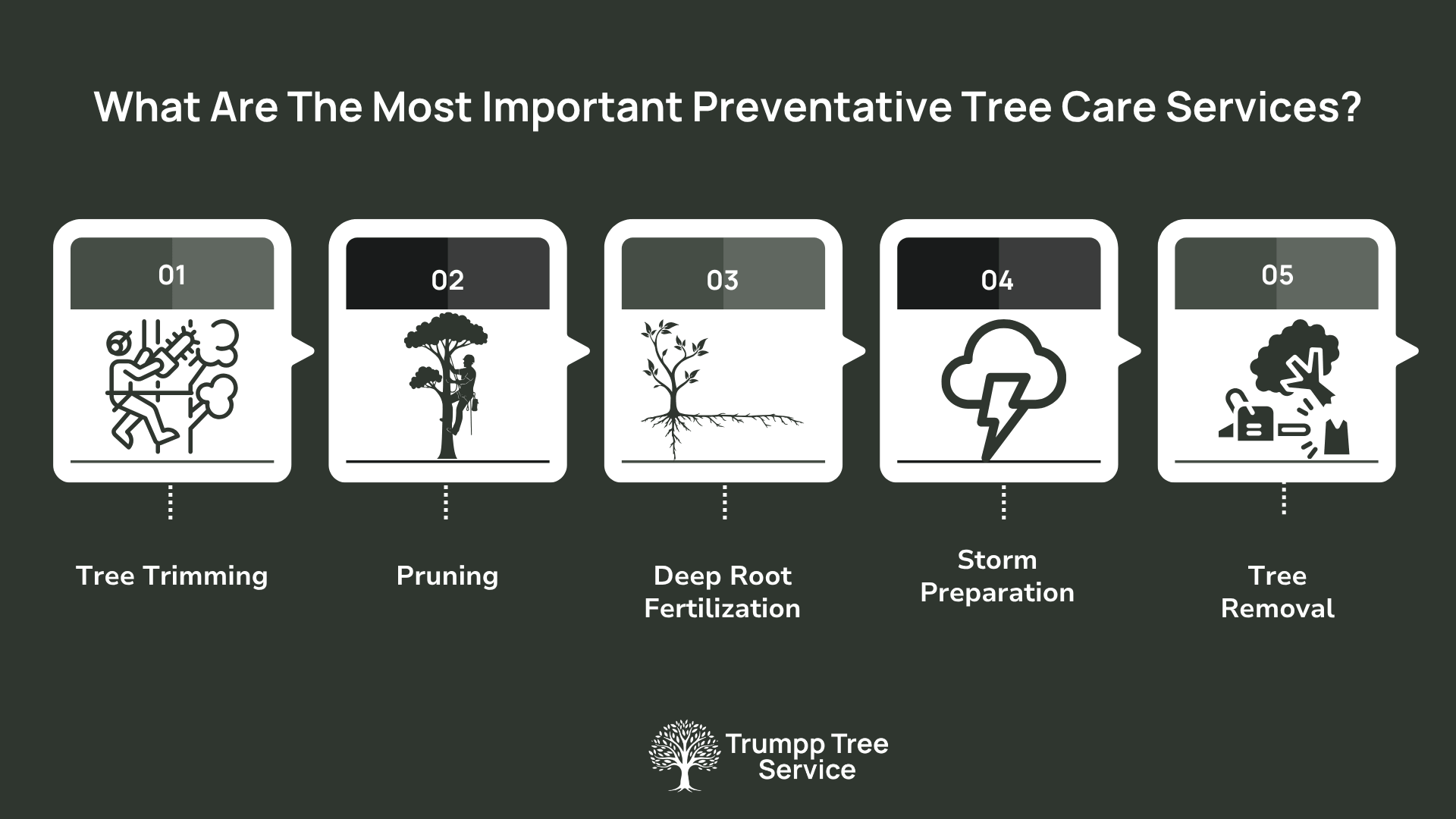
What Are The Most Important Preventative Tree Care Services?
Different trees need different types of care, but these are some of the most important preventative services we recommend.
Tree Trimming
Routine tree trimming is one of the best ways to prevent damage caused by trees.
Professional trimming helps:
Remove dangerous limbs
Prevent overgrowth near homes and power lines
Improve structure and balance
Reduce storm-related risks
This is especially important in Eastern Michigan, where heavy storms and snow accumulation can put extra strain on weak branches.
Pruning
Tree pruning focuses more on tree health and structure.
This involves carefully removing:
Dead limbs
Diseased branches
Crossing branches
Weak or unstable growth
Proper pruning helps trees grow more safely and naturally over time.
Deep Root Fertilization
Urban soil conditions can make it difficult for trees to get the nutrients they need.
Deep root fertilization delivers nutrients directly into the root zone to improve:
Root growth
Soil health
Stress resistance
Overall tree vitality
Healthier roots create healthier, more stable trees.
Storm Preparation
Waiting until after a storm usually means you’re already dealing with damage.
Preventative storm prep often includes:
Canopy thinning
Removing weak limbs
Reducing excess weight
Checking tree stability
These services help trees better withstand severe weather.
Tree Removal
Sometimes, preventative tree care means knowing when a tree can no longer be safely saved.
If a tree is severely damaged, diseased, structurally unstable, or leaning too close to your home, a professional removal may be the safest option before it causes serious damage.
Professional tree removal helps:
Remove dangerous or dying trees
Prevent damage to homes, vehicles, and power lines
Eliminate safety hazards before storms hit
Protect nearby healthy trees from disease spread
In many cases, removing one hazardous tree early can prevent a much larger and more expensive emergency later.
Signs Your Trees May Need Attention
Not sure if your trees need preventative care?
Here are some common warning signs:
Dead or hanging branches
Overgrown canopy
Limbs touching your home
Cracks in the trunk
Mushrooms near the base
Trees leaning more than usual
Branches rubbing together
Poor leaf growth or discoloration
If something looks off, it’s worth getting checked before it becomes dangerous.
Why DIY Tree Care Can Be Risky
A lot of homeowners try to trim or maintain trees themselves, but improper tree work can actually make problems worse.
Common mistakes include:
Over-pruning
Improper cuts
Weakening tree structure
Creating future safety hazards
And once ladders, chainsaws, or large limbs are involved, the risk of injury increases fast.
Professional tree care makes sure the work is done safely and correctly.
Why Homeowners Across Eastern Michigan Trust Trumpp Tree Service
At Trumpp Tree Service, we focus on keeping your property safe before problems happen.
Homeowners trust us because we provide:
Fast response times
Honest recommendations
Safe, professional tree work
Complete cleanup
Experienced crews
Licensed and insured service
We treat your property like it’s our own and never leave behind a mess.
Protect Your Property Before Problems Start
The best time to deal with dangerous trees is before they become dangerous.
If your trees look overgrown, unhealthy, damaged, or unsafe, don’t wait for the next storm to expose the problem.
Call Trumpp Tree Service today for a free quote.
We’ll inspect your trees honestly, explain what we see, and help you prevent costly damage before it happens.
Frequently Asked Questions About Preventative Tree Care
What is preventative tree care?
Preventative tree care involves maintaining and monitoring trees to reduce the risk of damage, disease, and safety hazards before problems develop.
How often should trees be inspected?
Most properties should have trees inspected at least once a year and after major storms.
Can tree trimming really prevent storm damage?
Yes. Proper trimming removes weak branches, improves airflow, and reduces stress on the tree during severe weather.
What’s the difference between pruning and trimming?
Pruning focuses more on tree health and structure, while trimming is often done for maintenance, appearance, and safety.
What are the signs a tree may become dangerous?
Dead limbs, cracks, leaning, decay, root issues, and hanging branches are all common warning signs.
Is preventative tree care worth it?
Absolutely. Preventative maintenance is usually far less expensive than emergency tree removal or repairing storm damage later.
