

What Is Pruning? Everything You Need To Know and More
If you’ve ever wondered what pruning is, you’re not alone. A lot of homeowners hear the term but aren’t exactly sure what it means or why it matters, and that’s okay. You don’t need to be an expert to get the tree the services it needs.
At its core, pruning is one of the most important things you can do to protect your trees, your property, and your peace of mind, especially here in Eastern Michigan, where storms and seasonal changes can take a toll.
Let’s break it down in a way that actually makes sense.
Key Takeaways
Pruning is the selective removal of branches to improve tree health, structure, and safety
Removing no more than ⅓ of a tree each year helps promote strong, sustainable growth
Proper pruning reduces the risk of storm damage, falling limbs, and property issues
Different types of pruning (health, structural, size management, and thinning) serve different purposes
Michigan weather makes regular pruning especially important for preventing damage
Signs like dead branches, overgrowth, or limbs near your home shouldn’t be ignored
Improper pruning can weaken a tree and create bigger problems down the line
Professional pruning ensures the job is done safely, correctly, and without damaging your property
What Is Pruning?
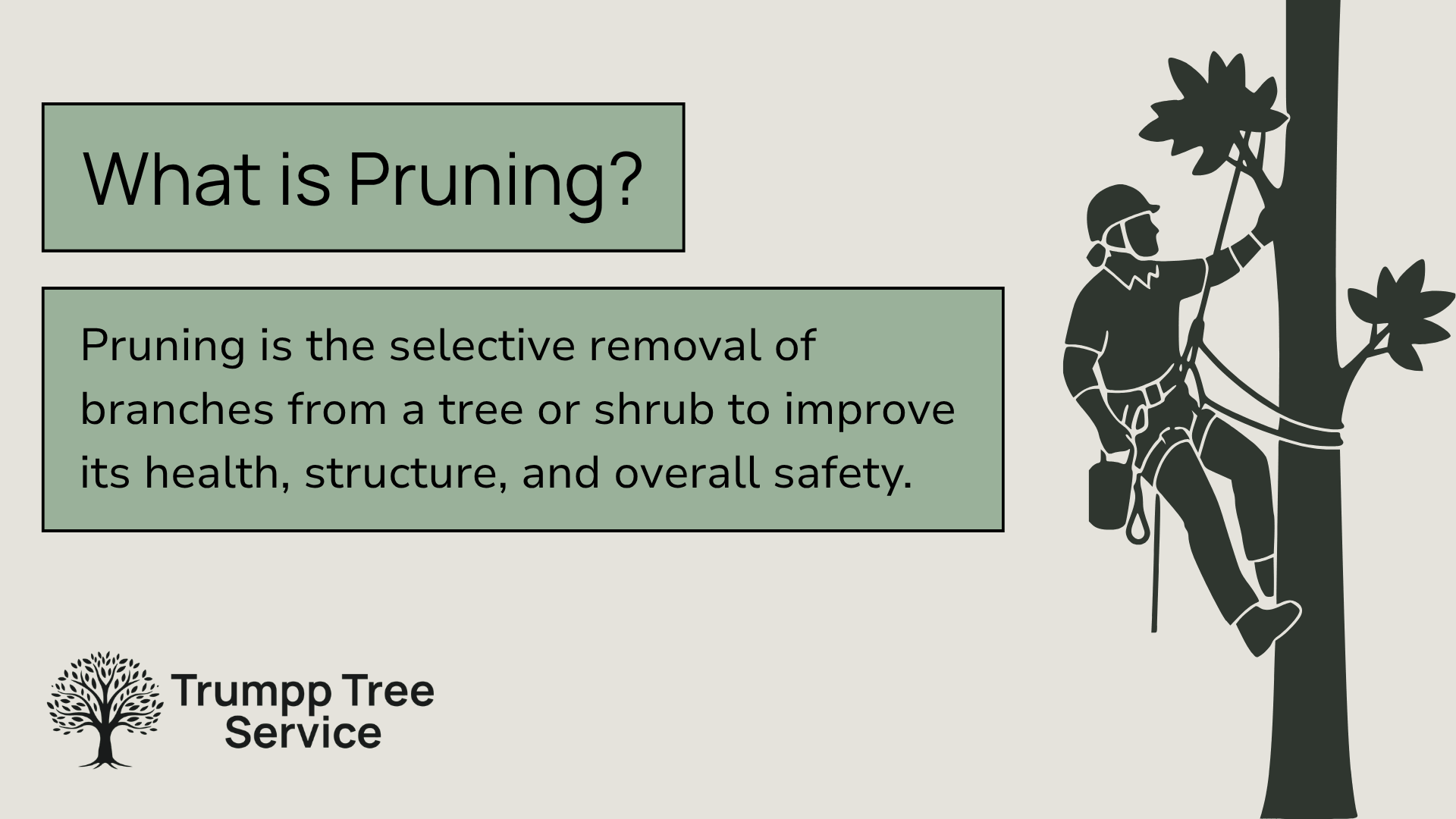
Pruning is the selective removal of branches from a tree or shrub to improve its health, structure, and overall safety.
When you prune a tree, you don’t just cut random branches. There’s a specific method for choosing which branches to remove so the tree can grow healthy, new branches. If you prune too many branches, the tree will work overtime to produce a ton of new, unnecessary branches. If you don’t remove enough, the tree’s growth could stall.
A general rule of thumb is to remove no more than ⅓ of the tree branches each year. That way, the tree can focus its energy on new growth sustainably.
When done right, pruning:
Removes weak or dangerous limbs
Improves how the tree grows
Reduces risk to your home and property
Encourages strong, healthy growth
In other words, pruning is both preventative maintenance and long-term protection for your landscape.
Why Pruning Matters More Than You Think
It’s easy to overlook pruning until there’s a problem. But by then, it’s usually more expensive and more dangerous to fix.
Here’s what proper pruning actually does for your trees:
Keeps branches from falling on your home, car, or driveway
Reduces the chance of storm damage
Prevents disease from spreading
Improves airflow and sunlight through the canopy
Helps trees grow stronger and more stable over time
When you live in areas like Clarkston, Rochester, Waterford, Brighton, Bloomfield, Milford, and Auburn Hills, this matters even more. Michigan weather can be unpredictable, and weak branches don’t hold up well under pressure.
The Main Types of Pruning
Not all pruning is the same. Different goals require different approaches.
Here are the most common types of pruning we use, and when they make the most sense.
Health Pruning
This is where we usually tend to start every job.
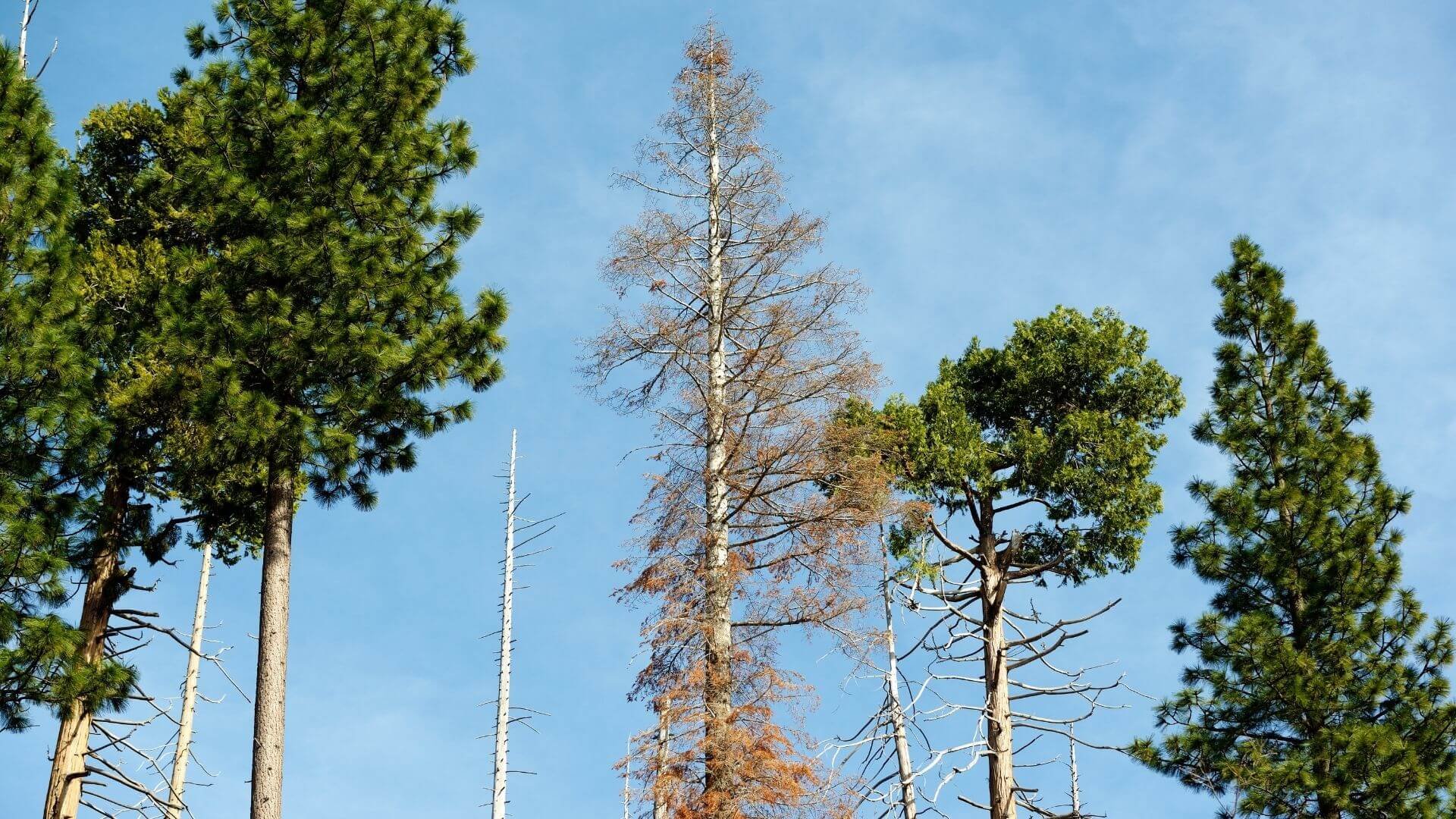
Health pruning focuses on removing anything that’s already compromised so it doesn’t affect the rest of the tree.
With a health pruning, we’ll usually remove:
Dead branches
Diseased limbs
Broken or damaged growth
We start by carefully identifying weak or unhealthy areas and removing them using proper cuts that prevent further stress or decay.
This matters more than you may think because dead or diseased branches are often the first to fall during storms or spread issues to healthy parts of the tree. Plus, these branches can be an eyesore when you’re trying to enjoy your yard.
Health pruning tends to be the best:
After storms
When you notice dead or hanging limbs
If the tree shows signs of disease or decline
This is often the most important type of pruning because it removes immediate risk and protects the tree moving forward.
Structural Pruning
This is where we focus on the long-term health and stability of your tree.
Structural pruning helps guide how a tree grows so it develops a strong, balanced shape over time.
With structural pruning, we’ll usually focus on:
Improving branch spacing
Removing competing or crossing limbs
Strengthening the tree’s overall framework
We start by identifying areas where the tree may be growing unevenly or putting too much stress on certain limbs. Then we make targeted cuts to help the tree grow in a more stable, natural way.
This matters more than you may think because trees with poor structure are much more likely to split, lean, or fail, especially during strong Michigan storms.
Structural pruning tends to be the best:
For younger or developing trees
When a tree looks uneven or top-heavy
If multiple large branches are competing for space
Think of this as setting your tree up now so you don’t have to deal with bigger, more expensive problems later.
Size Management Pruning
Sometimes, a tree simply outgrows its space, especially in residential areas.
Size management pruning helps keep your tree under control so it doesn’t become a risk to your home or property.
With this type of pruning, we’ll usually focus on:
Keeping branches away from roofs and gutters
Clearing space around power lines
Controlling overall height and spread
We start by identifying areas where the tree is getting too close to structures or creating clearance issues. Then we carefully reduce those sections while keeping the tree looking natural.
This matters more than you may think because overgrown branches can cause serious damage if they fall, or even just from constant contact with your home.
Size management pruning tends to be the best:
When branches are getting close to your house
When trees start blocking driveways or walkways
Before growth turns into a safety hazard
This is one of the easiest ways to prevent damage without having to remove the tree entirely.
Thinning and Canopy Reduction
This is one of the most important types of pruning for storm protection.
Thinning and canopy reduction focus on reducing the density of your tree so it can better handle wind, snow, and heavy weather.
With this type of pruning, we’ll usually:
Remove select interior branches
Open up the canopy for better airflow
Reduce excess weight throughout the tree
We start by identifying areas where the tree is too dense or heavy, then carefully remove smaller branches to lighten the load without weakening the tree.
This matters more than you may think because a dense canopy can act like a sail in strong winds, making the tree much more likely to lose limbs or even come down entirely.
Thinning and canopy reduction tend to be the best:
Before storm season
When a tree looks overly thick or heavy
If your yard isn’t getting enough sunlight
This type of pruning helps your tree stay balanced, reduces stress, and gives it a much better chance of holding up during Michigan’s unpredictable weather.
Pruning vs. Trimming: What’s the Difference?
A lot of people use these terms interchangeably, but they’re not exactly the same.
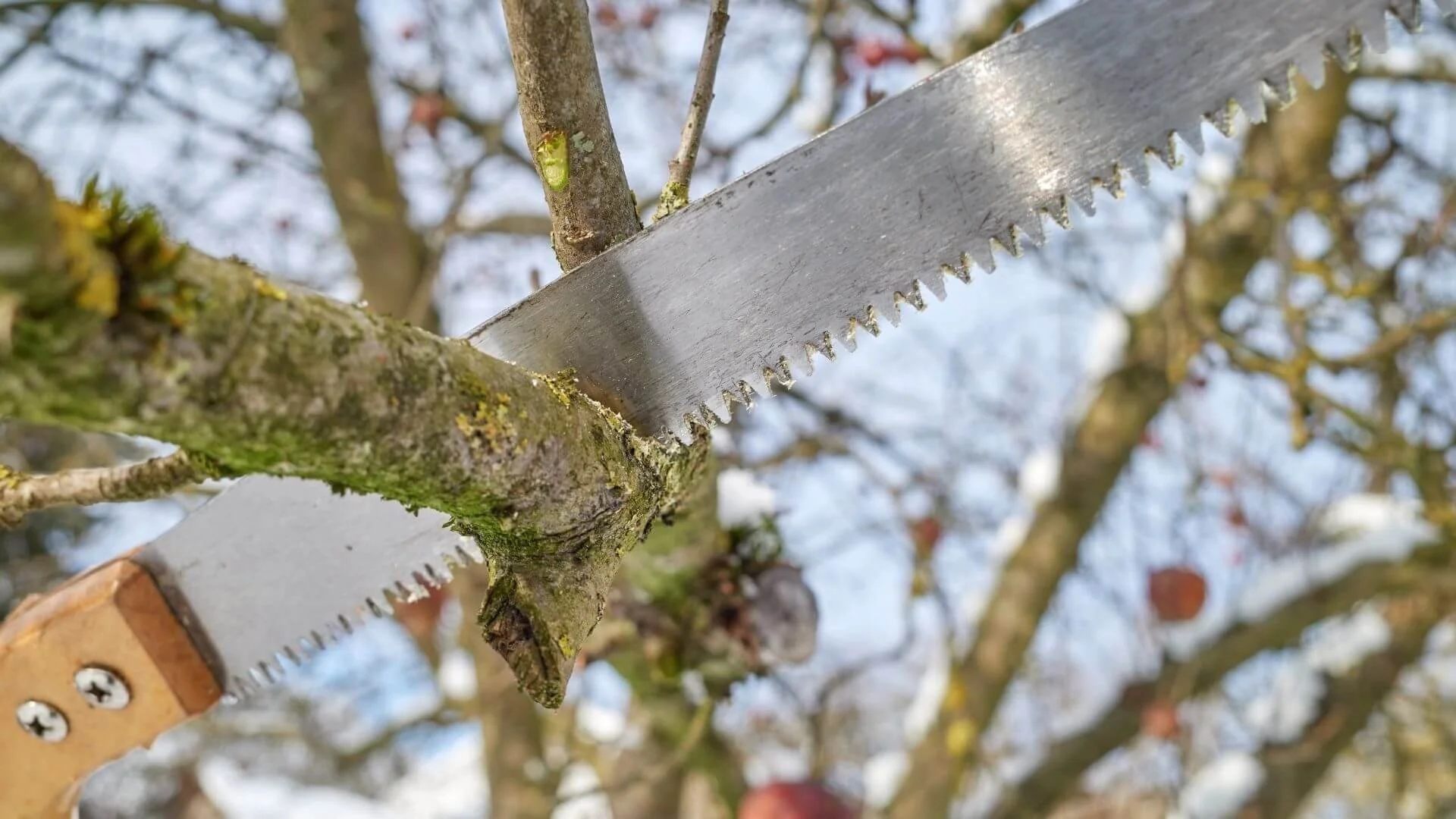
Pruning focuses on health, structure, and safety
Trimming is more about appearance and shaping
Both matter, but pruning is what keeps your tree safe and structurally sound.
When Is the Best Time To Prune Trees in Michigan?
Many of our customers don’t realize how important it is to time tree pruning here in Michigan.
In Eastern Michigan, the best time to prune is usually:
Late winter or early spring (before new growth starts)
After a storm (to remove damaged branches immediately)
Anytime you notice dead, diseased, or dangerous limbs
That said, every tree is different. The wrong timing can actually stress the tree or lead to poor growth. If you’re unsure of what type of tree you have, or if it’s the right time to prune, give us a call, and we’ll come out to give you an honest assessment.
What Are The Signs Your Tree Needs Pruning?
Not sure if your tree needs attention? There are a few clear warning signs.
Here’s what to look for:
Dead or hanging branches
Limbs growing too close to your home
Thick, overgrown canopy blocking sunlight
Branches rubbing or crossing each other
Signs of disease or decay
If you’re noticing any of these, it’s worth getting them checked out before they become bigger issues.
The Risks of Improper Pruning
Pruning might seem simple, but doing it wrong can actually make things worse.
Common problems include:
Cutting too much at once (which weakens the tree)
Making improper cuts that lead to disease
Causing uneven or unstable growth
Creating future safety hazards
In fact, over-pruning can stress a tree so much that it struggles to recover.
Why Hiring a Professional Tree Company Matters
There’s a big difference between trimming a small branch and safely pruning a full-sized tree.
Professional tree pruning means:
The right cuts, in the right places
Proper equipment for safety and efficiency
Protection for your home and the surrounding landscape
Clean, polished results
At Trumpp Tree Service, we handle everything from routine pruning to dangerous tree work, often the same day.
Tree Pruning in Eastern Michigan You Can Count On
We’ve helped homeowners and HOAs across:
Clarkston
Rochester
Waterford
Brighton
Bloomfield
Milford
Auburn Hills
And surrounding Eastern Michigan communities
Whether it’s preventive pruning or cleanup after a storm, we treat your property like it’s our own and leave it cleaner than we found it.
Hire a Tree Pruning Expert Today
Pruning your tree goes beyond just trimming some branches. It’s how you keep your trees healthy and alive to enjoy for years to come.
If your trees look overgrown, damaged, or just not quite right, don’t wait until something falls.
Call Trumpp Tree Service today for a free quote.
We’ll take a look, give you honest recommendations, and handle the job safely and quickly.
FAQs About Pruning
What is pruning in simple terms?
Pruning is the process of cutting specific branches to improve a tree’s health, shape, and safety.
How often should trees be pruned?
Most trees benefit from pruning every 1–3 years, depending on their size, species, and condition.
Can pruning help prevent storm damage?
Yes. Removing weak or overextended branches reduces the risk of breakage during storms.
Is pruning good for tree growth?
When done correctly, pruning actually encourages healthier and stronger growth over time.
Can I prune my own trees?
Small branches, maybe. But for anything large or near your home, it’s safer to call a professional.
