

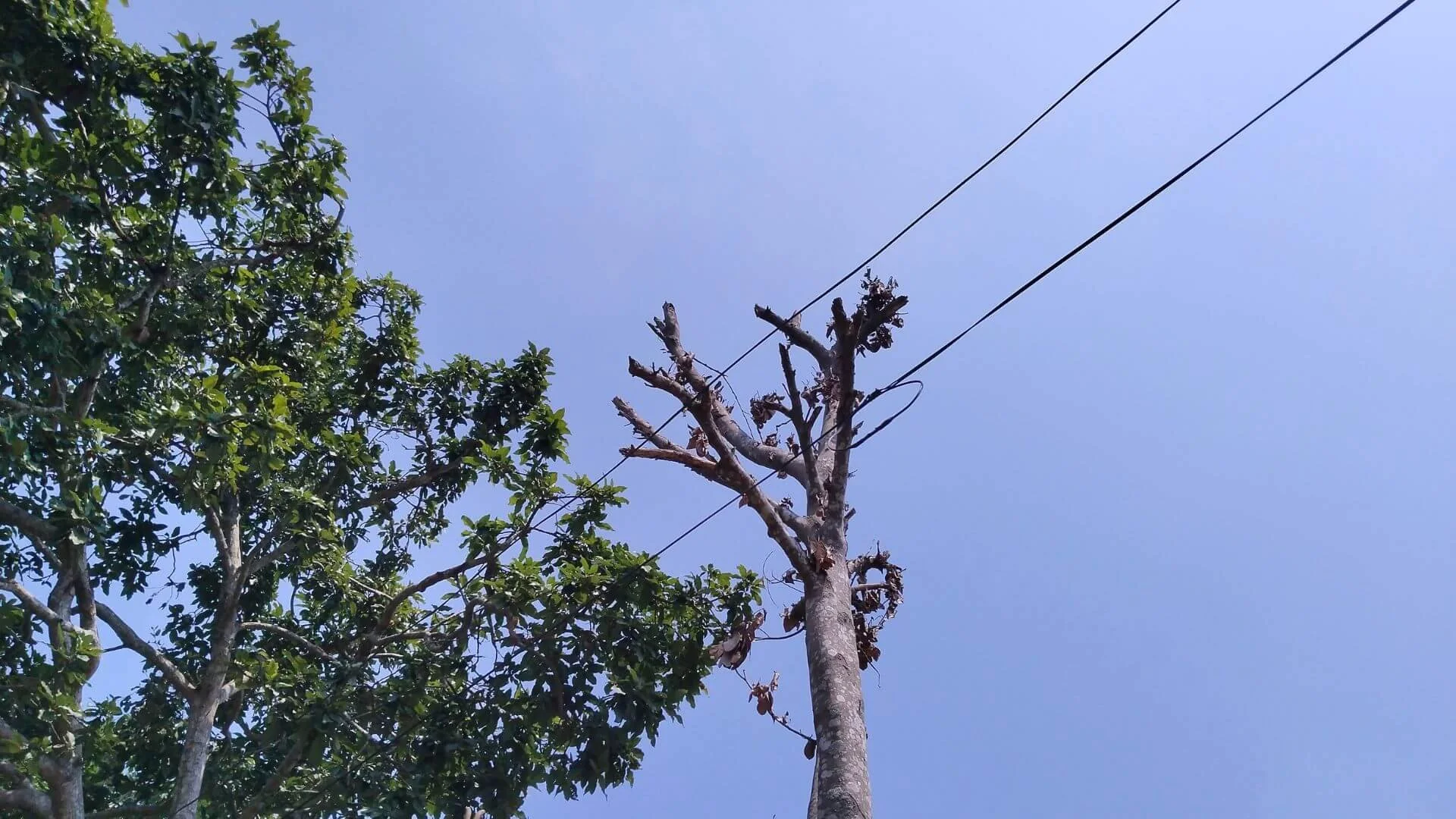
Trees add shade, privacy, and curb appeal to your Michigan property. But when branches start growing toward overhead power lines, they can become a serious safety concern.
Maybe you've noticed a limb hanging inches from a wire. Or a Michigan storm left a branch resting against the power line running to your house. Either way, you might be wondering what to do next.
If you have tree branches near power lines, don't attempt to trim or remove them yourself. Even branches that aren't visibly touching a wire can create dangerous situations.
At Trumpp Tree Service, we help Oakland County homeowners handle hazardous trees and difficult removals. Here's what you should know about trees near power lines, who to contact, and how to prevent future problems.
Key Takeaways
Tree branches near power lines can cause electrical hazards, fires, and power outages.
Never touch or trim branches that touch or come dangerously close to electrical wires.
Contact your electric utility before arranging tree work near power lines.
If a power line is down, stay away, call 911, and notify your utility.
Utility companies manage vegetation around certain power lines, but responsibilities vary.
Regular tree maintenance and thoughtful planting can help prevent future problems.
What Should You Do If Tree Branches Are Touching Power Lines?
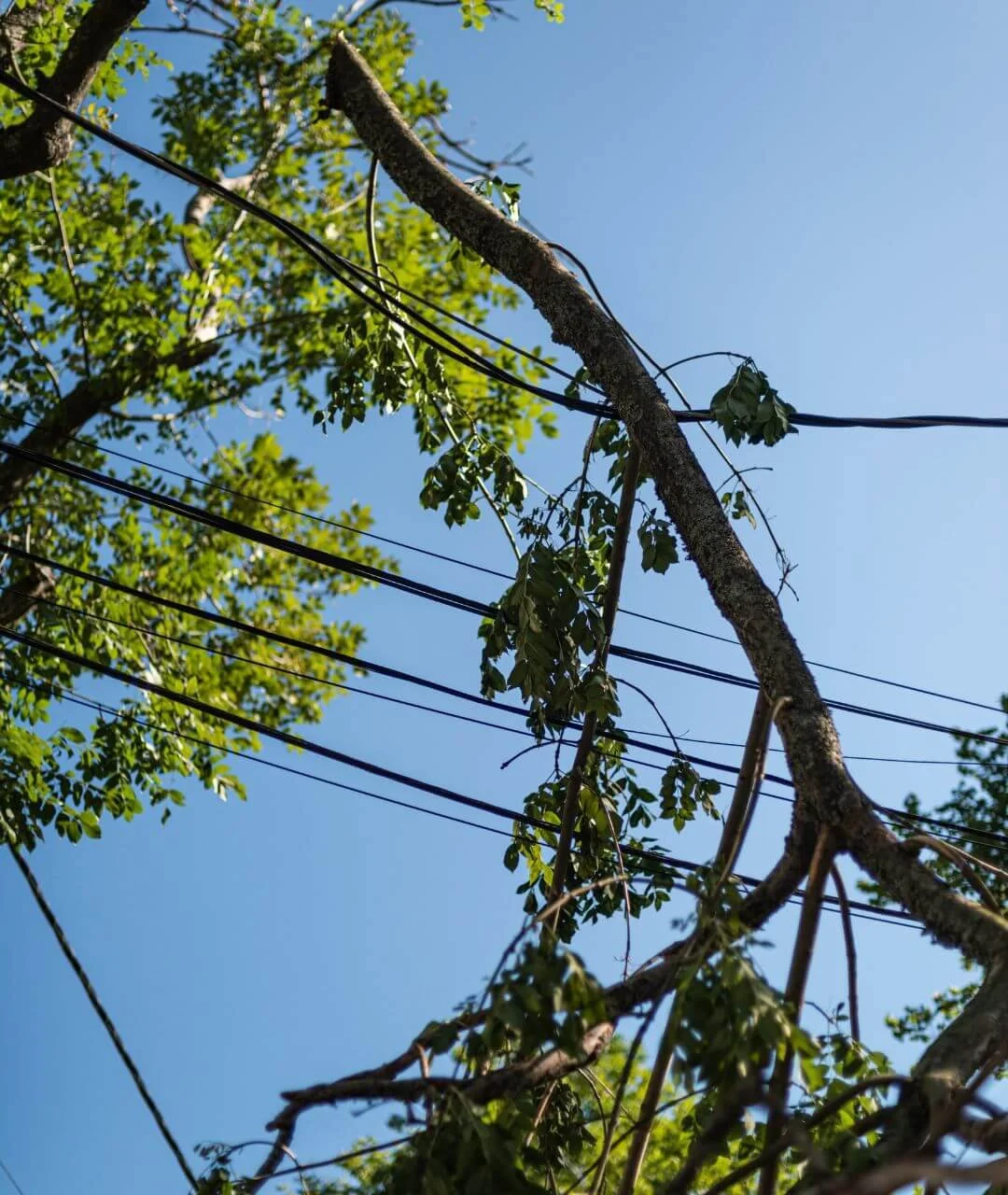
If branches are touching or dangerously close to electrical wires, your first priority should be keeping everyone safe.
1. Call 911 if a Power Line Is Down
A fallen power line is an emergency, so before you do anything else, call 911 and stay away.
Consumers Energy instructs customers to call 911 first, then contact the utility at 800-477-5050.
Never move a fallen wire, remove branches from it, or drive over it. Always assume a downed power line is energized.
2. Stay Away From the Tree and Wires
Keep children, pets, and other people away from the affected area. Never touch the tree, branches, or electrical wires. Even if nothing appears wrong, the line could still be energized.
Avoid touching nearby fences, ladders, or other objects that might be contacting the tree or wire. Remember, safety first, always.
3. Don't Attempt to Trim the Branches Yourself
Tree trimming near power lines is not a DIY project. Never use a chainsaw, pole saw, ladder, or other equipment to cut branches near electrical wires.
A falling branch or tool could contact the line and create a potentially fatal hazard.
Even experienced tree professionals need specialized qualifications and utility coordination to work near energized lines.
4. Contact Your Electric Utility Company
Your electric utility should be your first point of contact (after 911 if the power line is down)
The utility can assess the situation, determine who is responsible, and arrange qualified line-clearance personnel when necessary.
Consumers Energy customers can report potential tree concerns through the company's tree maintenance resources. If you're served by another provider, contact that utility for guidance.
5. Arrange Additional Tree Care After Utility Clearance
Once the utility has addressed the electrical hazard, you may still need help with the remaining tree.
For example, it might have damaged branches, significant decay, or structural problems.
A professional tree service can help evaluate these concerns and discuss trimming or removal options, provided the work can be performed safely.
Why Are Tree Branches Near Power Lines Dangerous?
When trees grow too close to electrical wires, the problem goes beyond an overgrown yard.
Power lines carry electricity that can cause severe injuries or death. Branches contacting electrical equipment can also interrupt service or create fire hazards.
Common risks include:
Electric shock: Trees touching energized wires can become electrical hazards.
Power outages: Branches can interfere with wires during storms.
Fires: Electrical faults and damaged equipment can create fire hazards.
Falling branches: Broken limbs may pull down wires or damage nearby structures.
And here's something many homeowners don't realize: A tree doesn't have to be visibly touching a power line to be dangerous. Branches can sway into wires during strong winds or bend under heavy snow and ice.
That's especially important in Michigan, where thunderstorms, winter storms, and freezing rain can put additional stress on trees.
How to Tell If Your Tree Is Too Close to Power Lines
You don't need to climb a tree or measure the distance to recognize a potential problem.
Instead, look for these warning signs from a safe location:
Branches touching or hanging close to electrical wires.
Limbs swaying into power lines during windy conditions.
Dead or damaged branches that could break and fall onto wires.
Trees leaning toward power lines or showing major trunk cracks.
Utility markings or notices indicating trees that need trimming or removal.
If you notice any of these warning signs, contact your utility company rather than approaching the tree.
Who Is Responsible for Trimming Trees Near Power Lines in Michigan?
This is one of the most common questions homeowners have, and the answer depends on the type of electrical line, the tree's location, and your utility company's policies.
Utility Companies Manage Vegetation Around Their Lines
Electric utilities maintain clearance around certain power lines to help reduce outages and electrical hazards.
For example, Consumers Energy uses qualified line-clearance contractors to manage trees and vegetation that could interfere with its distribution system. Depending on the tree's condition, species, and location, the utility may trim branches or remove the tree.
Utilities may also have easements or rights-of-way allowing them to maintain vegetation around their infrastructure.
What About the Power Line Running to Your House?
The smaller line connecting electrical service to your home is often called a service drop.
Tree maintenance responsibilities near service drops may differ from those for larger distribution lines. Don't assume your utility will automatically remove every branch near your house connection.
Contact your provider to determine its policy and whether electrical safety measures are needed before tree work begins.
Can You Hire a Tree Service to Trim Branches Near Power Lines?
You can, but it’s important to know that not every tree service is qualified to work near energized electrical lines. Utility line-clearance work requires specialized training, equipment, and safety procedures.
A general tree service shouldn't begin cutting branches that could contact energized wires simply because the company has experience removing trees.
The safest approach is to contact your utility first.
Depending on the situation, the utility may perform the work, arrange qualified contractors, or coordinate electrical safety measures before other tree work proceeds.
After the electrical hazard has been addressed, Trumpp Tree Service may be able to help with additional trimming or removal that can be performed safely.
How to Prevent Trees From Growing Into Power Lines
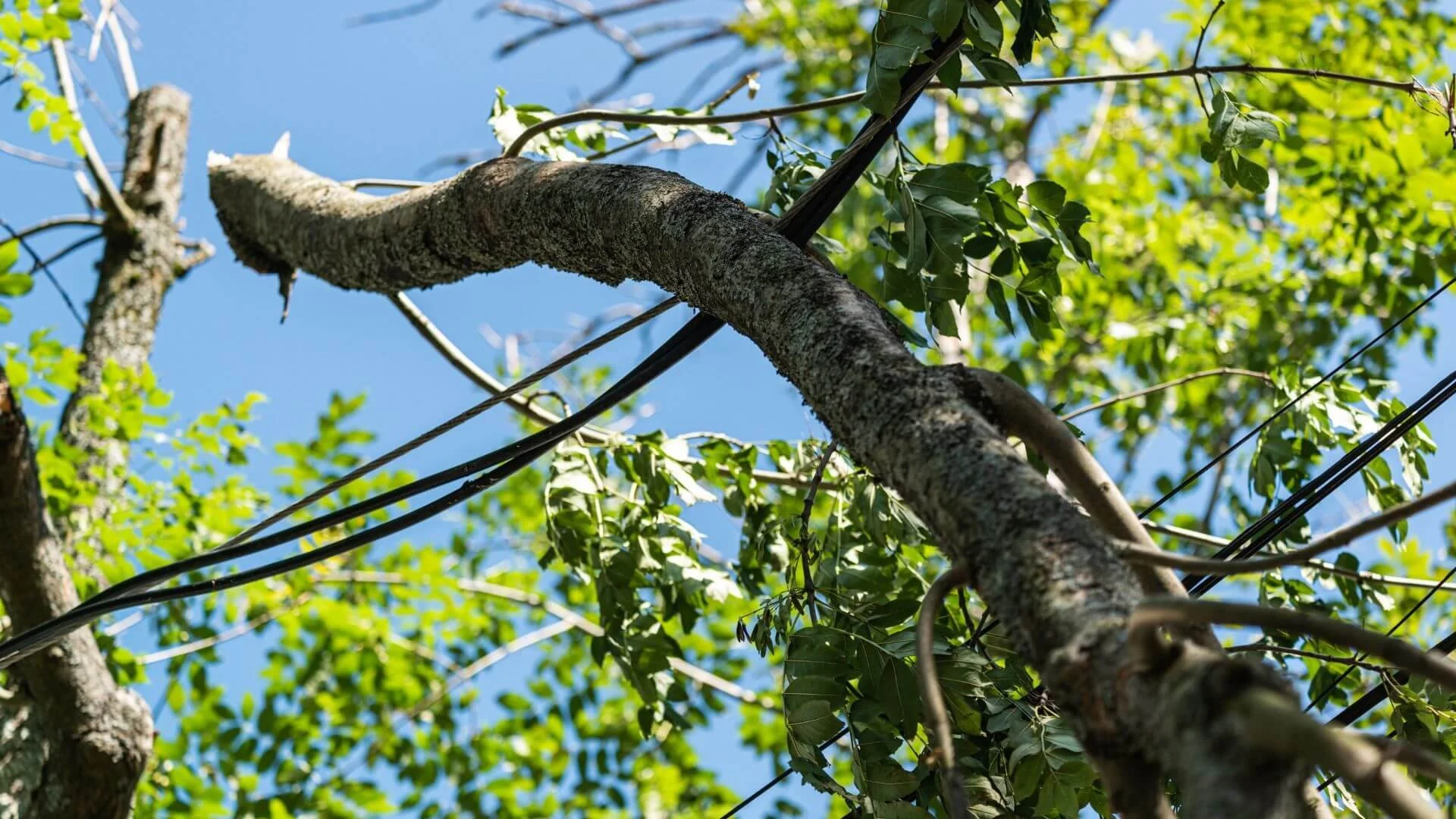
While you can't control Michigan's weather, you can take steps to reduce future problems.
Schedule Regular Tree Maintenance
Routine inspections help identify dead branches, structural problems, and growth that may eventually interfere with nearby structures or utilities.
Addressing concerns early can prevent more complicated tree work later. Remember, always coordinate pruning near electrical lines with the utility.
Inspect Trees After Major Storms
Michigan storms can leave trees with cracked limbs, broken branches, or damaged trunks. After severe weather, visually inspect your trees from a safe location.
If you notice damage near power lines, report it to your utility rather than attempting cleanup.
When Is Tree Removal Better Than Trimming?
Not every tree near a power line needs removal. Sometimes, properly planned tree trimming can provide clearance while preserving the tree.
However, removal may be necessary when:
The tree is dead or severely declining.
Major structural damage makes it unstable.
The tree repeatedly interferes with electrical infrastructure.
Pruning would leave the tree structurally compromised.
The decision depends on the tree's condition, location, and the utility's clearance requirements.
Trust Trumpp Tree Service With Your Hazardous Tree Concerns
Dealing with a hazardous tree can be stressful, especially when it's close to your home.
At Trumpp Tree Service, we help homeowners throughout Oakland County and surrounding communities handle dangerous trees, difficult removals, and damaged branches.
With more than 20 years of combined experience, our licensed and insured team understands the importance of careful planning and honest recommendations. Tree branches near power lines should never be ignored, but they also shouldn't be handled without proper precautions.
For electrical hazards, always start with your utility company. For other hazardous tree concerns on your property, contact Trumpp Tree Service for a free quote.
We're proud to serve Clarkston, Rochester, Waterford, Bloomfield, Auburn Hills, Pontiac, and surrounding Oakland County communities.
Frequently Asked Questions About Tree Branches Near Power Lines
Can tree branches conduct electricity from power lines?
Yes. A tree or branch contacting an energized line can become an electrical hazard. Never touch a tree that may be contacting electrical wires.
Will Consumers Energy trim trees near my house?
Consumers Energy maintains vegetation around certain utility lines, but responsibilities depend on the line and situation. Contact the utility to determine whether the work falls within its maintenance program.
Can I cut branches close to power lines if they aren't touching?
No. Branches and tools can move unexpectedly, and electrical hazards may exist without visible contact. Contact your utility for guidance.
Who pays for tree trimming near power lines?
It depends on the type of line, utility easement, and work required. Your electric utility can explain which maintenance it covers and what may be your responsibility.
What if a tree falls on a power line during a storm?
Stay away from the tree and line. Call 911, then notify your electric utility. Never attempt to move the tree or clear the debris.
