

How to Cut Down Trees Safely: A Homeowner’s Guide to Knowing When to Call a Pro
Learning how to cut down trees might seem straightforward, but in reality, tree cutting is one of the most dangerous jobs around a home. One wrong move can put your family, your property, and even your neighbors at risk.
At Trumpp Tree Service, we’ve spent more than 20 years helping homeowners, HOAs, and communities across Clarkston, Rochester, Waterford, Brighton, Bloomfield, Milford, Auburn Hills, and surrounding areas handle tree issues safely and quickly. If there’s one thing we know for sure, it’s this: understanding how to cut down trees also means knowing when it’s not a DIY job.
This guide explains what homeowners should think through before picking up a chainsaw, and why calling a professional is often the safest, smartest choice.
Key Takeaways
Knowing how to cut down trees starts with knowing when it’s unsafe to DIY. Large, dead, leaning, storm-damaged trees or trees near structures require professional care.
Tree cutting is more dangerous than most homeowners expect. Serious injuries often come from falling branches, unstable trees, or poor planning, not the chainsaw itself.
Safety gear is necessary, but experience matters more. Protective equipment helps reduce risk, but training and real-world knowledge are what prevent accidents.
Trees don’t always fall where you think they will. Lean, weight distribution, wind, and hidden decay all affect how a tree comes down.
Cleanup can be just as hazardous as the removal itself. Limbs under tension, rolling logs, and fatigue cause many post-cutting injuries.
Hiring a professional protects your home, safety, and liability. Licensed and insured tree services remove stress and reduce risk.
Trumpp Tree Service provides fast, reliable, local help. Same-day quotes, emergency response, and clean results give homeowners peace of mind.
Calling a licensed and insured professional protects your home, your safety, and your liability. With fast response times, same-day quotes, and clean results, Trumpp Tree Service gives homeowners peace of mind from start to finish.

Start With the Most Important Question: Is It Safe?
Before worrying about the mechanics of how to cut down trees, the first question should always be whether the tree should be cut down by a homeowner at all.
Tree cutting becomes especially dangerous when a tree is dead, cracked, hollow, or diseased. The risk also increases when large branches are hanging or broken, the tree leans toward a home or driveway, power lines are nearby, or the ground is uneven or sloped.
Dead and damaged trees are unpredictable. Branches can fall without warning, sometimes before the trunk even begins to move. If your tree shows any of these signs, it’s time to stop and call a professional. These are exactly the high-risk situations our crews handle every day.
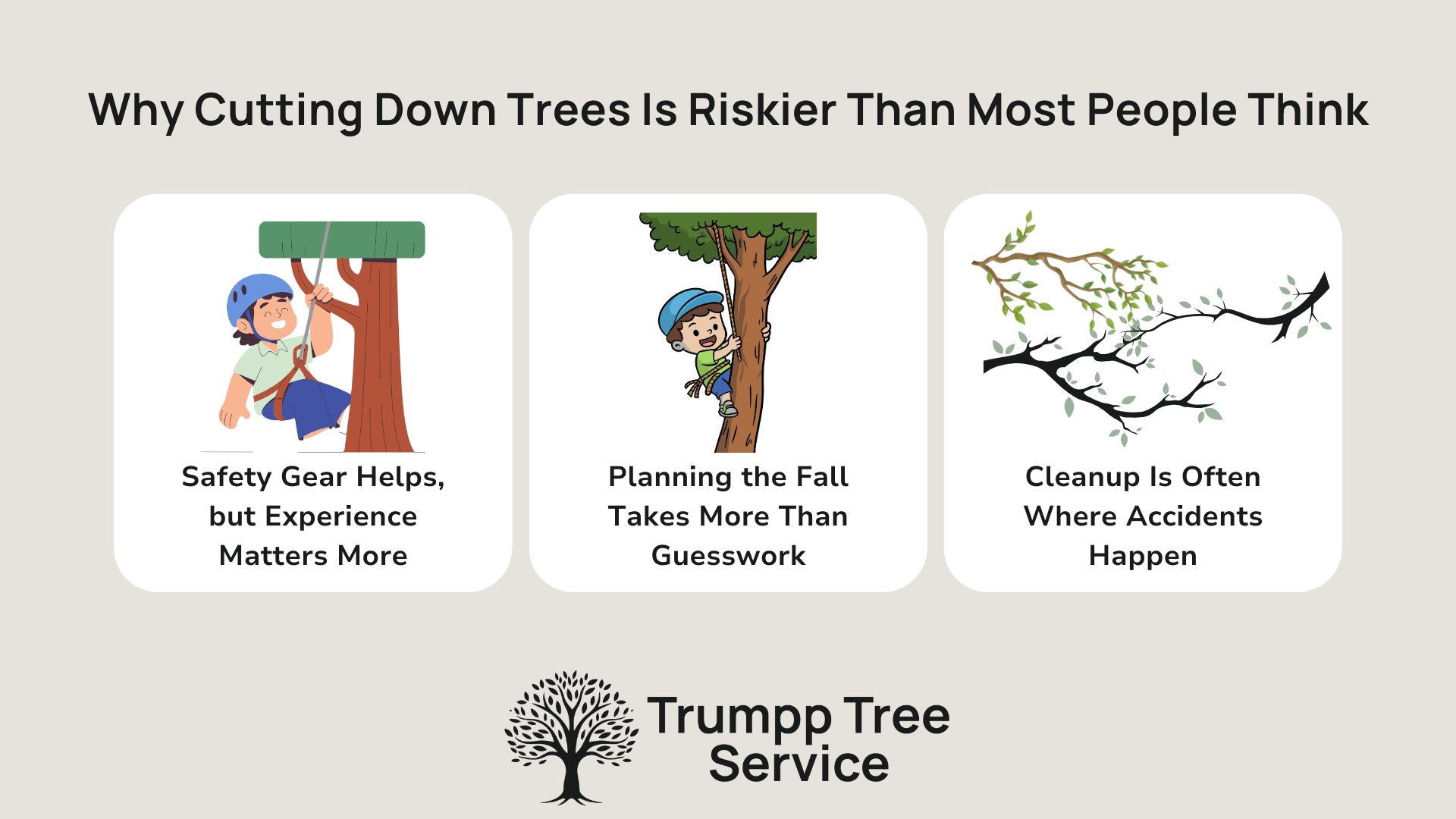
Why Cutting Down Trees Is Riskier Than Most People Think
Many homeowners underestimate the danger involved in learning how to cut down trees. The biggest risks don’t usually come from the saw itself but from what the tree does once cutting begins.
Trees can fall in the wrong direction, branches can snap back under pressure, and logs can roll unexpectedly during cleanup. Chainsaw kickback and losing footing while retreating are also common causes of injury. Without professional training, proper equipment, and extra eyes watching for danger, these risks escalate quickly.
Safety Gear Helps, but Experience Matters More
Professional tree work always starts with proper safety gear, including protective head, eye, hearing, leg, hand, and foot protection. That equipment is essential, but it’s only part of the equation.
Even with the right gear, tree cutting remains dangerous without experience. Knowing how to spot internal decay, shifting weight, and tension in branches is what helps prevent emergencies before they happen. Our crews are trained to recognize hazards early and respond before a situation turns dangerous.
Planning the Fall Takes More Than Guesswork
Trees don’t fall straight down. They fall based on lean, weight distribution, wind, and internal condition, factors that aren’t always obvious from the ground.
Trying to force a tree to fall where it “should” go is one of the most common causes of accidents, especially near homes, fences, sheds, or neighboring properties. When we assess a tree, we don’t guess. Every cut is planned so the tree comes down safely, or it’s removed in controlled sections when full felling isn’t safe.
Cleanup Is Often Where Accidents Happen
Even after the tree is on the ground, the danger isn’t over. Cutting branches and logs can cause sudden movement from limbs under tension, rolling sections of trunk, or kickback during limbing. Fatigue also plays a role, increasing the chance of mistakes.
Our team handles cleanup carefully and thoroughly. We work methodically, avoid rushing, and leave the property clean and respected.
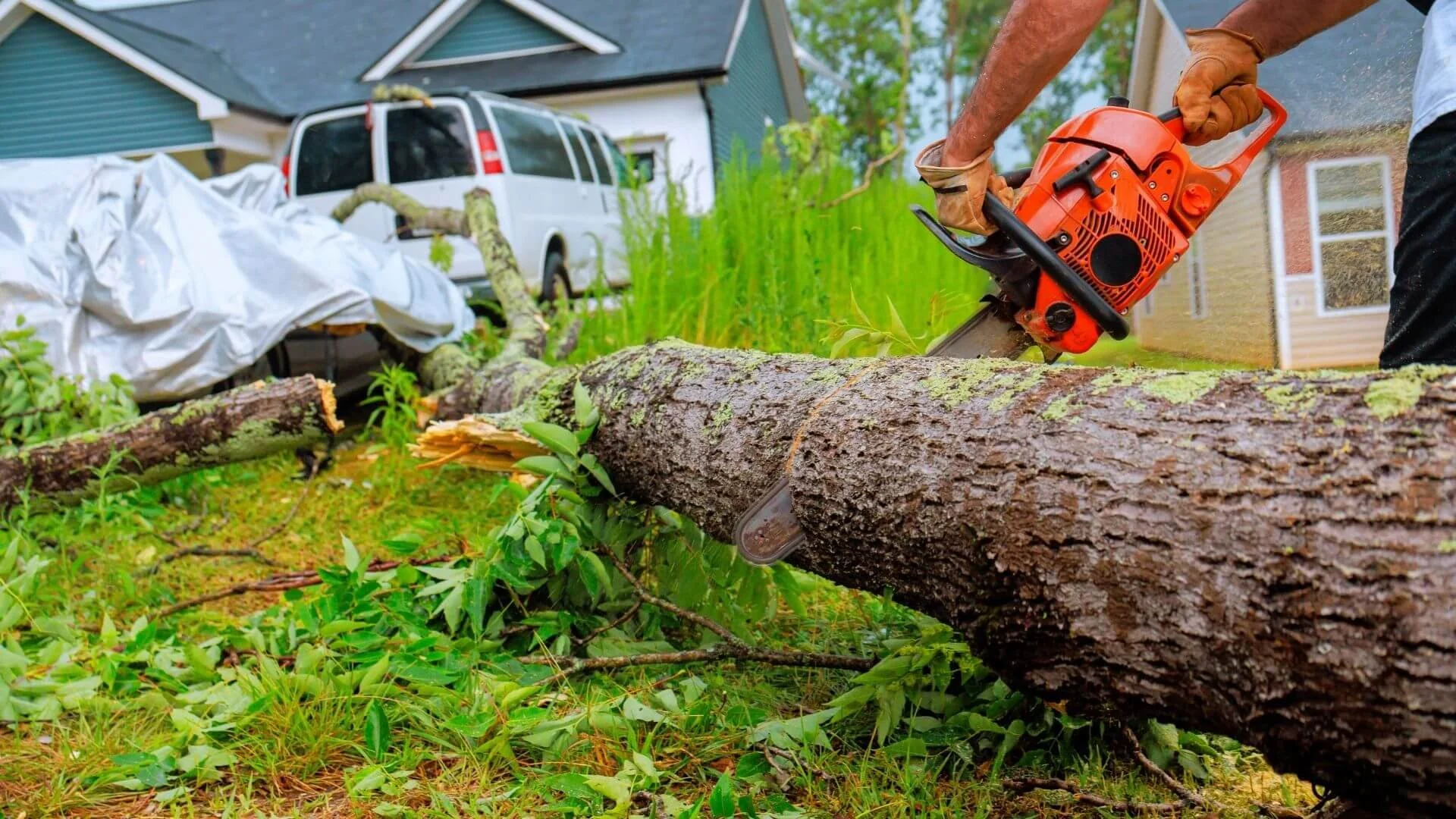
What Happens During a Professional Tree Removal
For many homeowners, the hardest part of dealing with a problem tree is not knowing what to expect. A professional tree removal should feel organized, calm, and handled from start to finish, and that’s exactly how we approach every job at Trumpp Tree Service.
It starts with an on-site assessment. We take the time to look at the tree’s condition, its location, and what’s around it, including nearby structures, power lines, and landscaping. From there, we create a clear plan focused on safety first, for your home, your neighbors, and our crew. If a tree can’t come down in one piece, we remove it in controlled sections to avoid damage.
On removal day, our team arrives prepared and on time with professional-grade equipment. We secure the area, communicate clearly, and carry out the removal using proven techniques designed to keep everything under control. You won’t see guesswork or rushed decisions, just steady, experienced work.
Throughout the entire process, you have peace of mind knowing the job is being handled by licensed and insured professionals who do this every day. From the first quote to the final cleanup, our goal is to remove the stress along with the tree and make the experience as easy as possible for you.
When to Call Trumpp Tree Service Instead of Doing It Yourself
If you’re researching how to cut down trees, here’s a simple rule to follow: if there’s any doubt at all, it’s time to call a professional.
Trees that are large, close to structures, near power lines, storm-damaged, dead, or unstable should always be handled by trained crews. Many homeowners also call us simply because they want peace of mind instead of risk. We offer same-day quotes, fast response times, and emergency service when safety is on the line.
Why Homeowners Trust Trumpp Tree Service
We’re not just a tree company, we’re your neighbors.
Homeowners, HOAs, and property managers trust Trumpp Tree Service because we show up prepared, communicate clearly, and treat every property like it’s our own. Our crews are licensed, insured, and covered by workers’ compensation, with over 20 years of combined experience in safe and hazardous tree work. We specialize in difficult removals, respond quickly, and always leave job sites clean. Pricing is fair and transparent, with no surprises.
Knowing How to Cut Down Trees Means Knowing Who to Call
Understanding how to cut down trees isn’t about being fearless. It’s about being smart, cautious, and prepared to protect what matters most.
If a tree on your property is causing stress or concern, don’t take chances. Call Trumpp Tree Service today for fast, professional tree cutting and trimming you can trust.
Frequently Asked Questions About Cutting Down Trees
Is it legal to cut down a tree on my own property?
In many cases, yes, but local regulations, HOA rules, or city ordinances may require permits, especially for large or protected trees. Additional rules often apply if a tree is near a road, utility line, or shared property. We can help you understand what applies before work begins.
Can I cut down a tree myself if I have a chainsaw?
Owning a chainsaw doesn’t make tree cutting safe. Without proper training, experience, and safety planning, even small mistakes can lead to serious injury or damage. Many homeowners start the job and realize quickly that it’s more dangerous than expected.
What makes a tree too dangerous for DIY removal?
Trees that are dead, diseased, cracked, leaning, storm-damaged, or close to homes, garages, fences, or power lines are especially hazardous. Trees on slopes or surrounded by other trees also increase risk and should be handled by professionals.
How much does professional tree removal cost?
Costs vary based on the size, location, condition of the tree, and urgency of the job. Trumpp Tree Service provides free quotes and honest, upfront pricing so you know exactly what to expect.
Do you offer emergency tree services?
Yes. We specialize in hazardous and emergency tree removals, including storm damage and fallen trees. When safety is a concern, we respond quickly and can often be on site within hours.
Will you clean up everything after the tree is removed?
Absolutely. Cleanup is part of the job. We remove debris, handle logs if requested, and leave your property neat and respected, often cleaner than before we arrived.
Why should I choose Trumpp Tree Service?
We combine experience, fast response times, licensed and insured crews, and a neighbor-first approach. Homeowners and HOAs choose us because we do the job safely, efficiently, and with respect for their property.
